






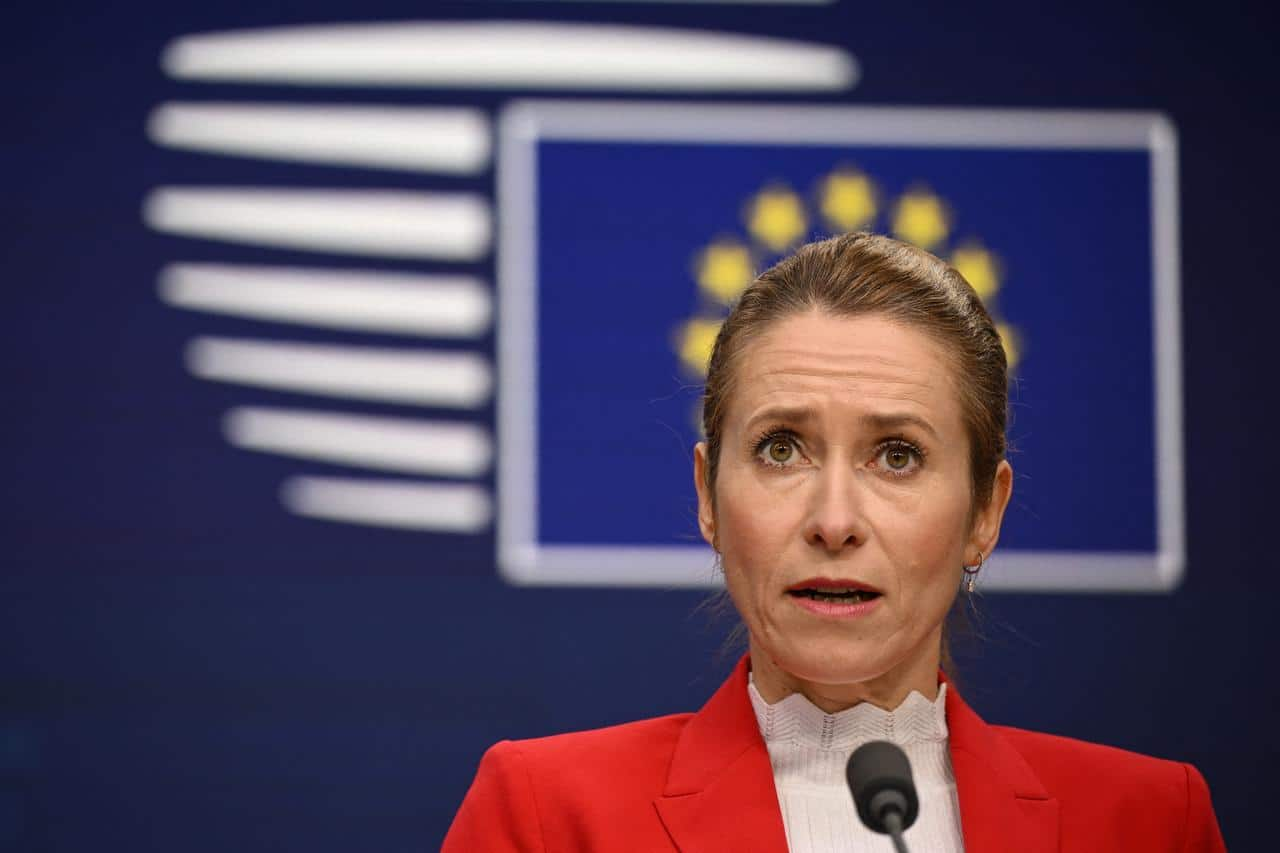

As the battle between Tehran and the United States and Israel increases, Middle Eastern nations have informed European officials that they worry a civil war could break out in Iran, according to EU foreign chief Kaja Kallas on Thursday.
Prior to a video conference with EU foreign ministers and Gulf Cooperation Council representatives, Kallas stated, “When we talk to the countries in the region, they are also worried about civil wars inside Iran because of the regime’s leadership and what is going on there.”
The goal of the European Union is to promote a diplomatic resolution to the problem.
Kallas told reporters, “Diplomacy is where wars really end, and there has to be room for diplomacy here to really get out of this cycle of escalation.”
According to information obtained by Naija News, Kallas stated that the EU is still “extremely worried” about marine security in the area and is attempting to maintain open channels like the Strait of Hormuz.
She pointed out that the attacks there have not had a significant short-term effect on the security of the European Union’s oil supply because the EU does not rely on oil from Gulf states.
The US-Spain Conflict Gets Worse Due to the Iran Offensive
Separately, the battle has intensified a dispute between Spain and the United States, with Washington threatening to sever ties with Madrid due to Spain’s unwillingness to permit American planes to use jointly maintained air and naval sites in southern Spain for the offensive against Tehran.
The US and Israeli bombardment of Iran have been denounced by Spain as unlawful and irresponsible. Madrid has refuted the White House’s assertion on Wednesday that Spain has consented to collaborate.
Reporters questioned Kallas on the possible course of the dispute between Washington and Madrid and its possible effects on the EU States. She expressed her optimism that Washington would uphold the trade agreement that was established last year, which is applicable to all EU members.
The remarks made by the head of EU foreign policy underscore the growing concern on a global scale regarding the conflict’s wider regional ramifications, especially the possibility of internal instability in Iran that might further destabilize the Middle East.
Gulf countries are especially concerned about any breakdown of order in Tehran that would lead to refugee flows, economic disruption, or regional spillover violence because they share maritime borders and economic links with Iran.