






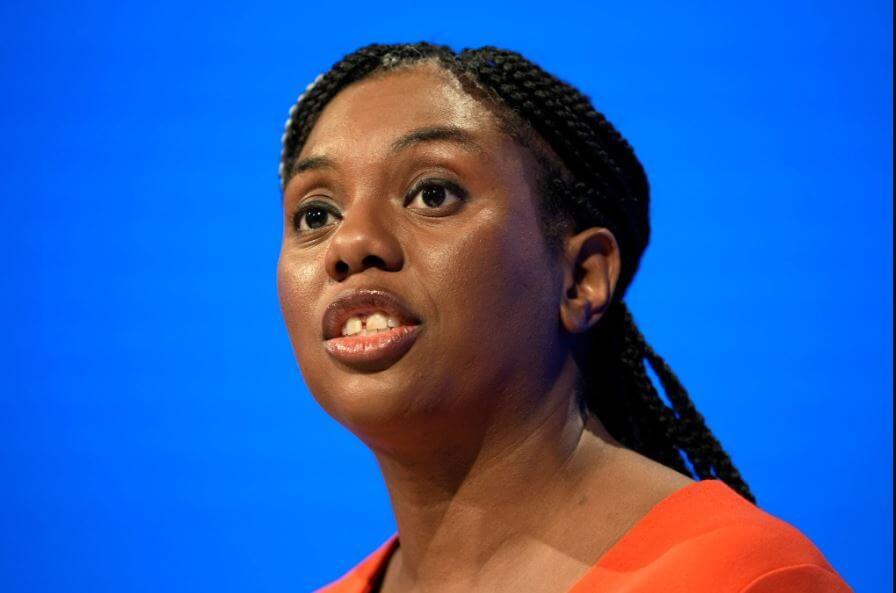

The United Kingdom’s decision to abstain from voting on a historic resolution by the United Nations (UN) General Assembly designating slavery and the transatlantic slave trade as one of the greatest injustices against humanity has drawn criticism from Kemi Badenoch, the leader of the UK Conservative Party.
With 123 votes in favor, three against, and 52 abstentions, the motion was approved on Wednesday.
The United States, Israel, and Argentina voted against the proposal, but the United Kingdom abstained along with 51 other nations.
Although it is frequently interpreted as a neutral viewpoint, abstention can sometimes indicate a planned political stance.
John Mahama, the president of Ghana who spearheaded the effort to pass the resolution, claimed that the long-lasting effects of slavery made it necessary.
He claims that civilizations are still impacted by structural injustices and racial inequality that have their roots in slavery.
Between 1500 and 1900, between 10 and 15 million Africans are thought to have been forcibly transported across the Atlantic; British ships are said to have carried at least three million of them.
Senegal, Benin, Ghana, Nigeria, and other West African nations were among the most severely affected.
The UN resolution calls on member nations to contribute to a reparations system that has not yet been established and to think about formally apologizing for their involvement in the transatlantic slave trade.
Badenoch criticizes the UK’s position
Badenoch responded on Thursday by criticizing the UK government for refraining from voting against the resolution in a post on 𝕏 (previously Twitter).
“The Labour government abstains, while Russia, China, and Iran vote alongside others to demand trillions in reparations from UK taxpayers,” she declared.
“The struggle to abolish slavery was spearheaded by Britain. What prevented Starmer’s representative from voting against this? Cowardice or ignorance?
“We shouldn’t be footing the bill for a crime we fought to end and are still fighting.”
Badenoch’s remarks exacerbate earlier disputes about her views on reparations and slavery.
She was criticized in 2024 for refuting allegations that slavery and colonialism were the foundation of Britain’s economic and commercial prosperity.
Additionally, she has called requests for reparations a “scam” in the past, claiming that certain countries supporting recompense were also complicit in the slave trade.
With calls for responsibility and reparations continue to elicit strong political reactions, the discussion highlights persistent global conflicts over how to address the legacy of slavery.