






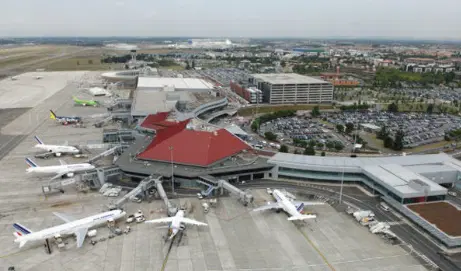

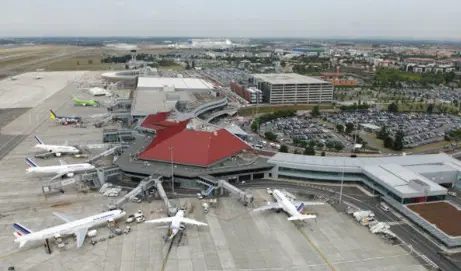
Chief Peter Ameh, the former chairman of the Inter-Party Advisory Council (IPAC), has denounced Kogi State’s proposed international airport in Zariagi, calling it a “irresponsible” and “grotesquely misguided” use of public monies.
Ameh was reacting to assertions made by Hon. Kingsley Fanwo, the Kogi State Commissioner for Information and Communications, that the airport is a top economic priority.
The absurd and irrational assertion that “no state in Nigeria needs an airport more than Kogi” is something that Ameh strongly disagrees with. “While the majority of people continue to live in poverty as farmers and rural residents contend with deteriorating roads, inadequate healthcare, deteriorating schools, frequent power outages, and restricted market access for their produce, the proposed airport is a flagrant misallocation of the state’s limited resources.”
He pointed out that there are airports in practically every one of the nine neighboring states and the Federal Capital Territory that around Kogi. “Kogi could become a transit and logistics hub connecting Abuja to the wider region—without duplicating redundant aviation facilities—with targeted investment in road networks and connectivity,” he continued.
The anticipated ₦50 billion cost of the project was challenged by Ameh, who cautioned that money would be better used for infrastructure that is focused on people. “The state should invest a substantial amount of money—possibly half of capital expenditures—in high-capacity train services that link Kogi and the FCT. He said that this would make daily commuting easier, make it easier to carry agricultural products, draw in enterprises, provide employment, and spur economic expansion.
Ameh used the Chuba Okadigbo International Airport in Ebonyi State as an example of financial mismanagement, pointing out that the project had wasted about ₦55 billion with little return and had experienced delays, shutdowns, and criticism.
“The Kogi State Government must immediately abandon this scandalous airport boondoggle and reroute every kobo to infrastructure that benefits common people—decent roads, effective rail, agricultural empowerment, accessible healthcare, and high-quality education,” he said. Real, equitable progress, not ostentatious, tone-deaf misuse of public monies, is what Kogi deserves.