



By ChapiOdekina Gift
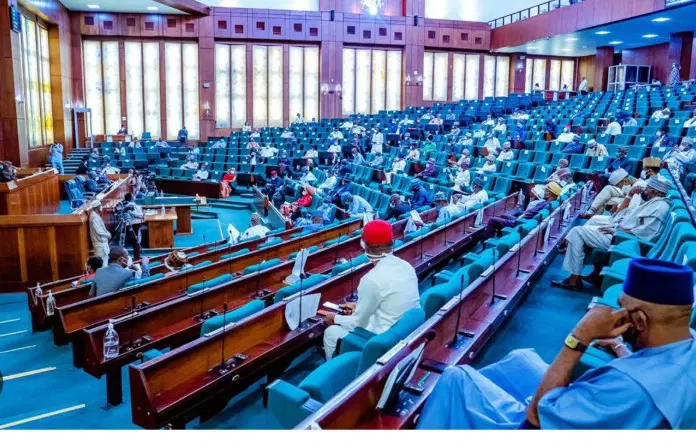
Abuja-The House of Representatives, yesterday, endorsed President Bola Tinubu’s 2026 Appropriation Bill, adopting a proposed N58.18 trillion budget focused on macro-economic stability, greater security, and higher capital investment.
On December 19, 2025, the National Assembly received the budget, dubbed “The Budget of Consolidation, Renewed Resilience and Shared Prosperity.” Lawmakers hailed it as a turning point in Nigeria’s economic re-engineering.
Speaking about the general principles of the budget, House Leader Mr. Julius Ihonvbere warned that the Tinubu administration inherited “distorted and disarticulated institutions” and warned against expecting painless reforms, emphasizing that difficult but necessary decisions are necessary for sustainable development.
“Development that is not sustainable is not development at all,” he stated, pointing out that even while the current economic changes were difficult, they were necessary to reposition the nation for long-term progress.
A 3.98 percent economic growth rate ahead of the 2026 fiscal year, a decrease in inflation to 14.45 percent from almost 25 percent, higher revenues, export growth, and more foreign direct investment were among the important macroeconomic statistics he used to support the budget.
He claims that while Nigeria’s external reserves have increased to a seven-year high of over $47 billion, enough to cover more than ten months’ worth of imports, the naira has stabilized at N1,400 to the dollar, down from over N1,800.
Since this government took office, not a single naira has been printed. The economy has stabilized thanks to that fiscal restraint, he continued.
According to the budget’s structure, there will be a N23.85 trillion gap between total revenue of N34.33 trillion and total expenditure of N58.18 trillion. The allocation of N26.08 trillion for capital expenditures and N15.25 trillion for non-debt recurring expenditures is what lawmakers called a “clear signal of commitment to sustainable development.”
This is a change from earlier times when capital investment was less important than ongoing spending. Real progress is fueled by increasing capital expenditures in this area, the lawmaker stated.
An oil benchmark of $64.85 per barrel and daily oil output of 1.84 million barrels are included in the 2026 budget forecasts.
With N5.41 trillion set aside to address food shortages and issues, N3.56 trillion for infrastructure, N3.54 trillion for education, and N2.48 trillion for health, sectoral allocations demonstrate that security and defense are given top priority.
Citing recent diplomatic and economic missions, especially to Turkey, as part of initiatives to enhance the business climate and fortify alliances, lawmakers also emphasized the administration’s strong foreign involvement to draw investment.
Beyond the numbers, the House pointed out that the budget is a collection of executive pledges to increase revenue performance through new tax measures, strengthen budget discipline, prevent leaks, consolidate macroeconomic stability, develop human capital, and manage debt responsibly.
The member stated, “We are not saying the government is perfect, but it is our duty as representatives of 360 constituencies to guide it to do the right things at all times.”
The Speaker submitted the question to a voice vote after receiving contributions. The budget was approved by the House thanks to the overwhelming victory of the “ayes.”
The House delayed plenary for two weeks to hear the budget defense after unanimously approving the budget on second reading.