






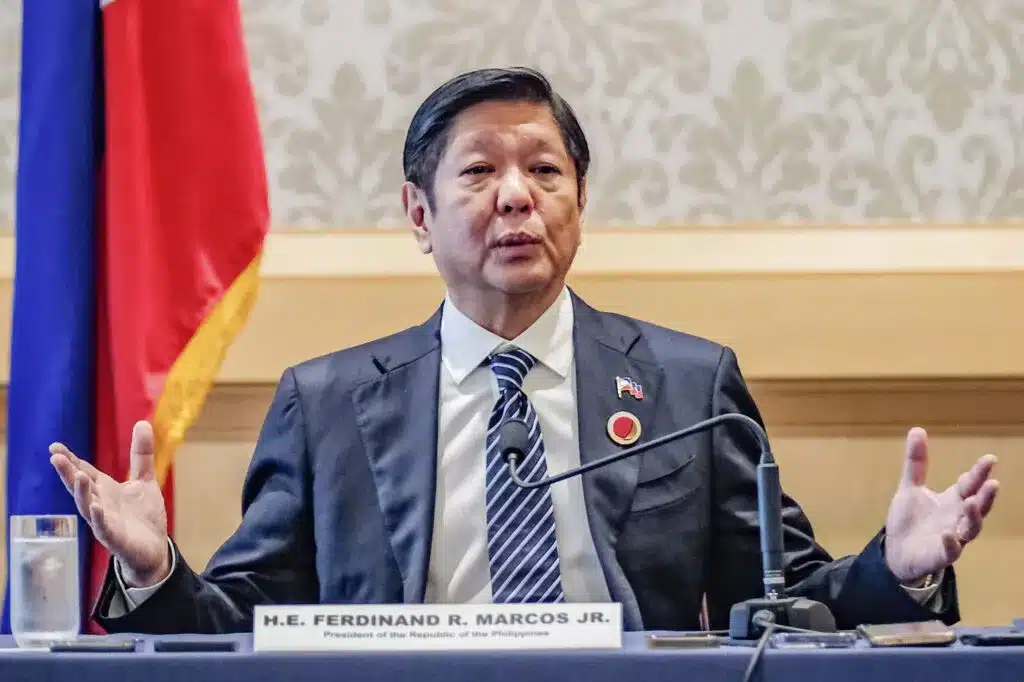
In reaction to the escalating violence in the Middle East, Philippine President Ferdinand Marcos Jr. proclaimed a state of national energy emergency on Tuesday, citing a “imminent danger” to the nation’s energy supplies.
According to Naija News, the government is acting quickly to prevent a possible crisis at a time when oil prices are rising and international energy markets are becoming more unpredictable.
Marcos revealed that a special committee had been established to guarantee the efficient distribution and accessibility of vital resources throughout the nation.
He claims that the committee will be in charge of distributing and supplying fuel, food, medications, agricultural products, and other necessities.
The president blamed the emergency declaration on disturbances brought on by the Middle East conflict in an executive order made public.
According to him, the battle has put the nation’s energy security at risk by creating “uncertainty in global energy markets, severe supply-chain disruption, and significant volatility and upward pressure on international oil prices.”
“The declaration of a state of national energy emergency will enable the government to implement responsive and coordinated measures under existing laws to address the risks posed by disruptions in the global energy supply and the domestic economy,” Marcos continued.
The proclamation, which will be in force for a year, gives the government unique authority to guarantee a sufficient supply of fuel across the country.
It gives authorities the authority to purchase petroleum products and, if needed, pay in advance to ensure prompt delivery.
The action, according to analysts, is intended to avoid supply shortages and protect the economy from additional shocks.
Based on usage patterns, the nation presently possesses roughly 45 days’ worth of gasoline supply, according to Energy Secretary Sharon Garin’s earlier revelation.
In order to create a buffer stock, she said the government was working to acquire at least one million barrels of oil from both domestic and foreign suppliers.
However, Garin cautioned that because of the unstable global market, uncertainties might continue in future supply orders.
Additionally, it is anticipated that the emergency declaration will allow the government to avoid bureaucratic roadblocks and react to the crisis’s economic consequences faster.
Marcos also instructed the finance ministry and the central bank to keep a careful eye on how the Middle East war affected remittances, the Philippine peso, and the possibility of currency depreciation.
The government’s readiness has been questioned despite its action.
The administration was criticized by senators looking into the matter for what they saw as a lack of a cohesive and well-coordinated response to rising oil prices.
The nation’s minister of economic planning has previously cautioned that the increase in fuel prices might hamper economic growth and cause inflation to reach levels not seen in years.
As transportation workers, commuters, and consumer organizations prepare to go on strike for two days starting on Thursday, tensions among the populace are rising.
The demonstration, according to the groups, is a reaction to the increase in fuel costs and what they see as the Marcos administration’s inaction before the situation worsened.
As the Philippines prepares for possible economic instability in the next months, the current situation demonstrates the profound effects of international wars on home economies.