






Written by Okerinde Ayobami
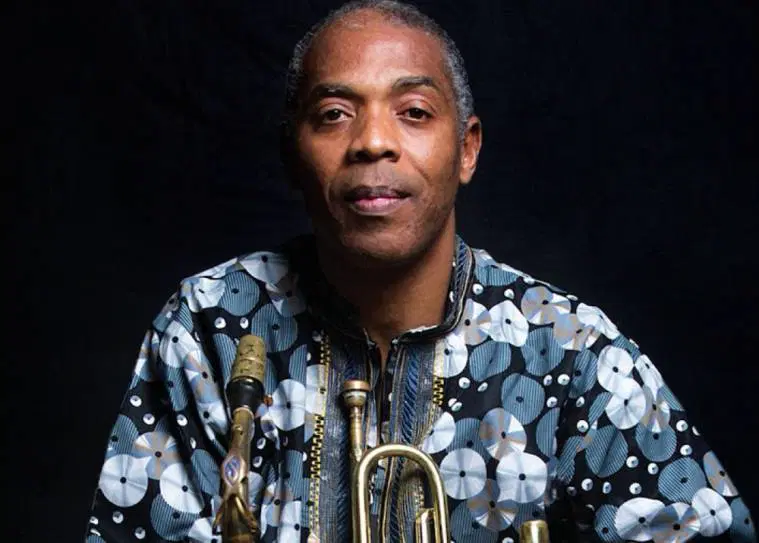
Grammy-nominated Afrobeat icon Femi Kuti has voiced worries about the increasing parallels between Wizkid and his late father, Fela Anikulapo-Kuti, calling the argument pointless and distracting.
In a Friday interview with Arise Television, Femi stated that he purposefully avoided getting involved in the debate, emphasizing that Nigeria had more urgent problems than celebrity comparisons.
His remarks coincide with days of heated social media discussions generated by disagreements over Fela’s legacy and whether contemporary Afrobeat artists should be compared to him. This development has elicited responses from musicians, fans, and cultural analysts alike.
After Seun Kuti, Fela’s youngest son, publicly denounced attempts by Wizkid supporters, often referred to as “FC,” to depict the singer as the “new Fela,” the debate gained traction. Seun accused his fan base of frequently bringing up his father’s name in online music arguments during a live Instagram session.
He maintained that his father’s name should not be used as a comparison point in discussions about modern music, arguing that comparing Wizkid to Fela degraded the cultural, artistic, and political legacy the Afrobeat superstar developed over decades.
Later, the conversation devolved into personal attacks. Seun addressed disagreements regarding his well-known moniker, Big Bird, and accused Wizkid’s camp of encouraging rather than discouraging the controversy. He insisted that his criticism was aimed at fan culture rather than Wizkid specifically.
After days of correspondence, Wizkid responded by sharing a video of a woman criticizing Seun’s behavior on Instagram before making direct and derogatory remarks about him. In response, Seun mentioned that millions of naira had been spent to honor his father’s legacy, citing business tributes to Fela.
In response to the dispute, Femi Kuti stated that parallels including Fela were inappropriate.
“I would argue that all the younger musicians admire Fela, who is our father. He remarked, “I don’t think it’s a problem that should have been brought up because he’s the model for many things in Nigerian music and art.”
“Fela should just be put in a section of his own, and we just idolize and respect him,” he continued.
Due of his personal relationships to both sides, Femi declined to take a side in the conflict. Since Wizkid is like a son to me and Seun is my brother, I don’t want to get involved in their situation. I simply wish that hadn’t come up. I hope that everyone will settle down quickly.
He advised Nigerians, especially the youth, to focus their energies on national development instead of polarizing discussions.
“Nigeria has been taking part in the Grammy Awards a lot lately. It’s beneficial for both the nation and Africa that we are receiving the credit we merit. So, we should just be glad for ourselves and use this to grow the music industry and the country. The two major concerns facing the nation now are terrorism and tribalism, which is what I and the younger generation should be concentrating on.
There are other Kuti family members who have responded as well. Yeni Kuti, Fela’s daughter, had before warned against public disputes involving cultural icons, saying that they harm Nigeria’s reputation.
“When two giants fight, it’s the ground that suffers,” she stated in an interview with TVC’s Your View. Nigeria’s reputation is currently suffering because we are perceived as a people who do not value our idols. Regardless of how you interpret it, he created a musical genre. Why are you criticizing him if you have a problem? He is an icon. He left after completing his own. The reason for his greatness is that we are still talking about him 27 years after his death. Let us respect that.”
“I adore Wizkid, and I declined to reply to some of their remarks. He’s a close friend of mine, and we’ve come a long way. He was a backing vocalist at the temple during Felabration, as I recall.
The argument coincides with Fela Anikulapo-Kuti’s impending posthumous Grammy Lifetime Achievement Award, which would make him the first African musician to do so.
Speaking about the honor, Femi said it was quite moving, especially for people who saw Fela’s struggles against Nigeria’s military regime. The Kuti family and the international Afrobeat community have worked for decades to maintain Fela’s legacy via music, scholarship, and cultural celebration, he said, and this is reflected in the prize.
“Everyone is overjoyed. We’re thrilled. I’m in Los Angeles right now, and unless you were alive in the 1970s, it’s incredibly difficult to describe what my father did to oppose dictatorship in Nigeria. People were terrified of the armed forces.
“My son Made, my brother Seun, my older sister, and the rest of the family have all done what we can to keep talking about him. His music is being performed by musicians. His music is being studied by others. Afrobeat musicians today draw inspiration from him. His music is being sampled by others.
“To top it with one of the biggest awards in the world, the Grammys, what more can we want,” he continued. However, it’s not only for the family. For many, Fela was a father figure. We refer to him as “our father” for this reason. In the 1970s and 1980s, he served as a voice for the voiceless.
Femi noted that many of the problems his father campaigned against decades ago are still unaddressed in light of Nigeria’s stalled growth.
“The world should be envious of Africa, especially Nigeria. It’s terrible that we are still struggling with basic infrastructure. Why is it so difficult to make Nigeria great?