



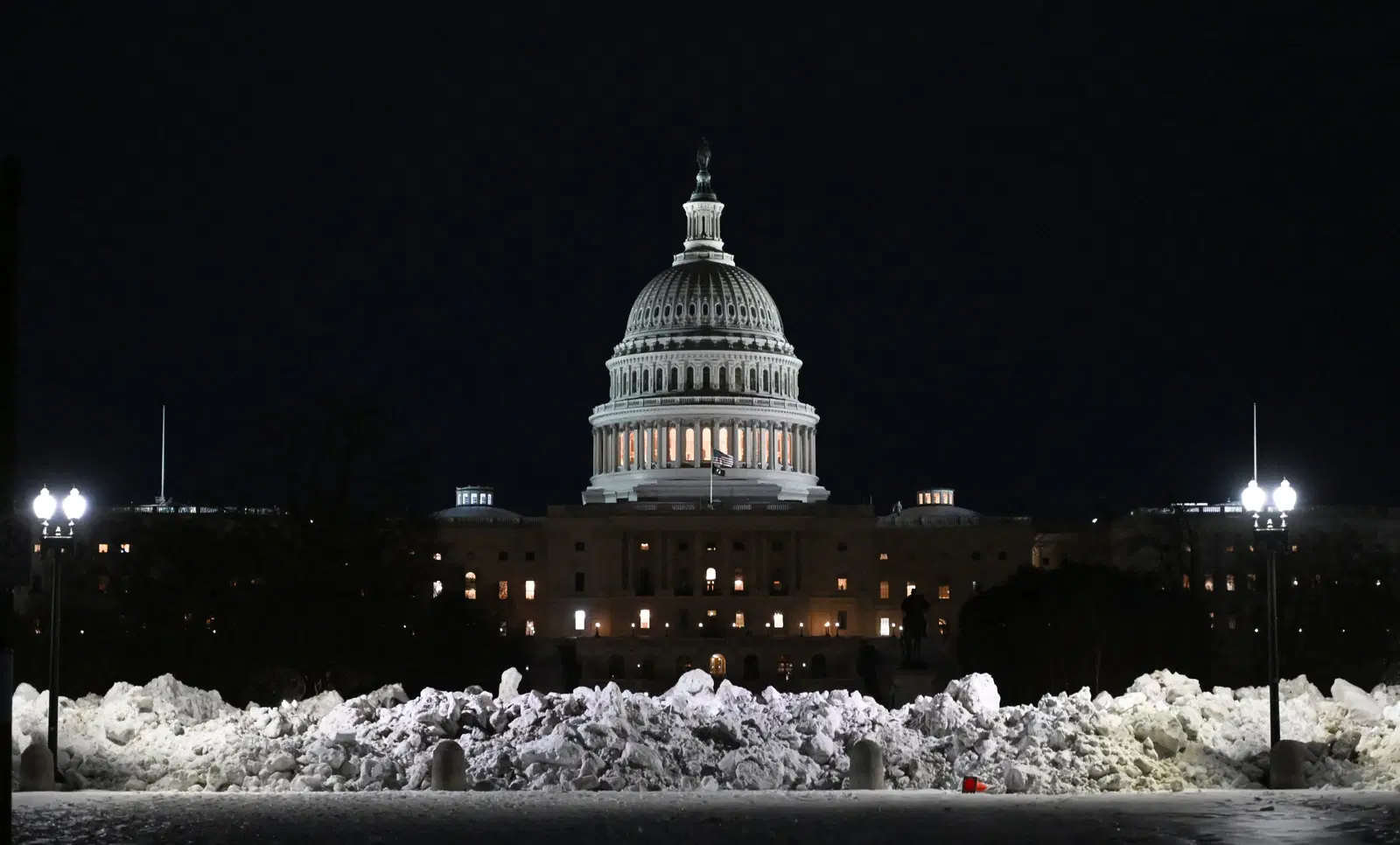
As a midnight funding deadline passed without Congress approving a 2026 budget, the US government entered a partial shutdown on Saturday. However, the damage was anticipated to be minimal because the House was scheduled to move early next week to ratify a plan supported by the Senate.
The budget shortfall came when negotiations over fresh funding for the Department of Homeland Security (DHS) broke down due to Democratic outrage over the deaths of two protestors in Minneapolis by federal immigration officials.
Senate Democratic Minority Whip Dick Durbin wrote on social media, “The Trump Administration is wasting valuable resources targeting peaceful protestors in Chicago and Minneapolis instead of going after drug smugglers, child predators, and human traffickers.”
“Americans are becoming less safe under this administration.”
Approximately 75% of government operations are impacted, which might lead to shutdown processes in a variety of departments and operations, including housing, defense, education, and health.
Congressmen from both parties stated that the Senate’s decision made a brief disruption much more likely than a protracted standoff, despite the fact that federal departments were supposed to start enacting shutdown plans overnight.
The actual effects of the shutdown on government programs, contractors, and federal employees would be limited if the House passes the plan as anticipated early next week, as funding would be restored within days.
However, tens of thousands of federal employees would run the possibility of being placed on unpaid leave or working without pay until funding is restored if the shutdown lasted longer than a few days.
In addition to a two-week stopgap measure to keep DHS running as lawmakers continue to negotiate immigration enforcement policies, the Senate enacted a package late Friday that cleared five outstanding funding bills to cover the majority of government agencies until September.
Due to the expiration of the deadline, the House of Representatives was not in session and is not expected to reconvene until Monday.
In an attempt to prevent a protracted shutdown, the second of his second term, President Donald Trump supported the Senate agreement and called for quick House action. Last fall, a record-length halt crippled federal services for over a month.
Political retaliation
Only after Republican Senator Lindsey Graham of South Carolina removed a procedural obstacle that had caused the package to stall late on Thursday did the Senate make forward.
Graham had opposed to the DHS stopgap’s provisions as well as wording introduced by the House that repealed a previous law that gave senators the right to sue the Justice Department if their phone records had been taken during previous probes.
After Senate leaders pledged to hold future votes on legislation he is sponsoring to crack down on so-called “sanctuary cities” that refuse to help with federal deportation operations, Graham consented to withdraw his hold.
In the wake of the deadly murders of Alex Pretti and Renee Good in Minneapolis, Democrats have remained united in their opposition to fresh DHS funding without alterations to immigration enforcement.
Their deaths strengthened opposition to funding immigration agency without new safeguards and increased scrutiny of the behavior of federal officials.
Party leaders have accused immigration authorities of acting with minimal control and have urged reforms including stronger warrant requirements, limits on some enforcement tactics and better responsibility for agents in the field.
The White House’s readiness to separate DHS funding from the larger budget proposal was widely perceived by the US media as an admission that the government needed to reevaluate its deportation strategy in light of the political fallout following the Minneapolis fatalities.
Republicans disagree on that strategy.
Conservatives have cautioned against compromises they believe could weaken immigration enforcement, even as some lawmakers have accepted the necessity for adjustments in the wake of the shootings.
During the next DHS negotiations, a number of them have indicated that they will pursue their own agendas, such as those aimed at states and municipalities that restrict collaboration with federal authorities.
Six of the twelve yearly funding bills have already been approved by Congress, but they only make up a small portion of discretionary spending. Large portions of the federal government are funded by the remaining bills, so if the lapse is prolonged, it will be substantial.
In a memo released on Friday night, the Office of Management and Budget instructed agencies to get ready for a “orderly shutdown,” stating:
“We hope that this lapse will be brief.”