






The Federal Government recently provided tricycles, machinery for processing rice and cassava, and other items to increase farmers’ production in Nasarawa State ahead of the 2026 dry season.
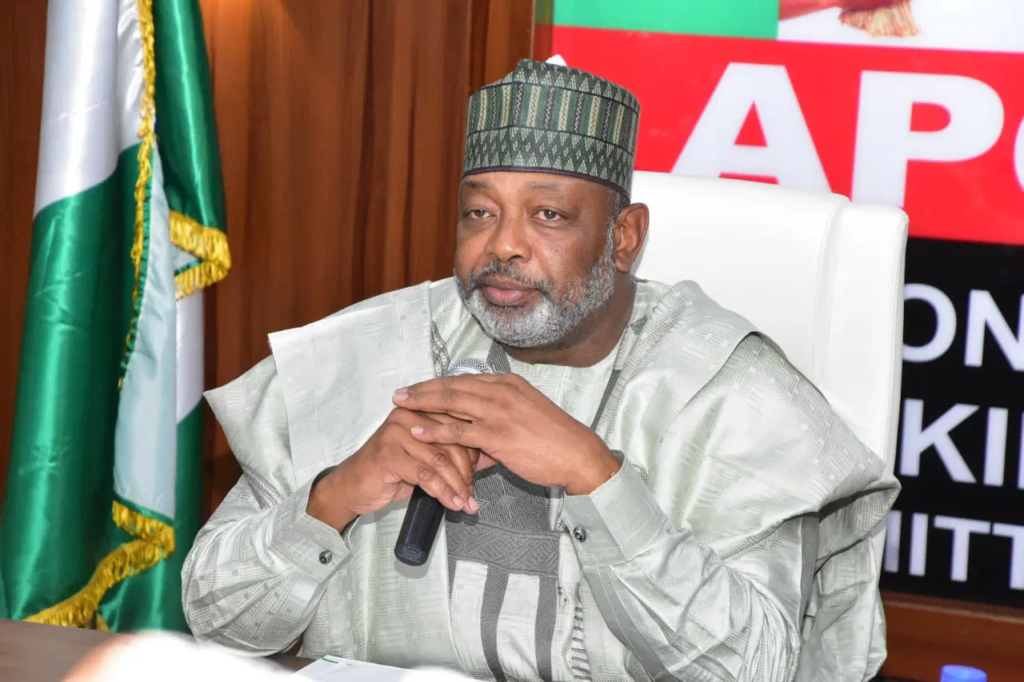
During a two-day working visit to Nasarawa State, Sen. Abubakar Kyari, the Minister of Agriculture and Food Security, distributed post-harvest and processing equipment to the state’s agribusiness groups and farmers who were supported by the Value Chain Development Programme (VCDP).
46 tricycles, 16 rice steam parboiling machines, 18 rice milling machines, 10 rice stoning machines, 3 rice color sorting machines, 11 digital weighting scales, 2 rice dehusking machines, 4 cassava grating machines, 4 cassava Manuel fryers, 3 automated framers, and 3 hydraulic pressers were given to the farmers.
The Minister expressed optimism that the intervention would add value, lower post-harvest loss, empower women and young farmers, boost productivity and competitiveness, support enterprise growth, deepen market participation, and increase opportunities for rural employment, according to a statement signed by Ezeaja Ikemefuna, Head of the Department of Information.
In addition to aligning with the National Agricultural Technology and Innovation Policy, or NATIP, he disclosed that the program, which is carried out in collaboration with the International Fund for Agricultural Development, or IFAD, aims to address structural constraints in the rice and cassava value chains through integrated investments in production, aggregation, processing, infrastructure, market access, and institutional strengthening.
“Agriculture must deliver results—food for our people, jobs for our youth, income for our farmers, and stability for our nation,” he declared.
“Agriculture is being transformed into a modern, market-oriented, private sector-driven enterprise under Mr. President’s leadership, with Nasarawa State leading the way.”
While praising Nasarawa State Governor Engr. Abdullahi Sule for his dedication to starting large-scale food production, he (Kyari) highlighted the Nasarawa Agro-Commodity Company (NASACCO) and the One-Stop Investment Center (OSIC) as important initiatives bolstering the state’s investment climate.
Additionally, he stated that the Tinubu-led administration’s goal for the agriculture sector aligns with the State’s efforts under the Governor to increase domestic food supply, stabilize prices, conserve foreign exchange, and generate jobs.
The Minister claims that the federal-state relationship has produced strengthened producer groups, sophisticated processing facilities, and operational aggregation centers.
He claimed that these measures were boosting Nasarawa State’s contribution to national food security, stabilizing rural incomes, and generating jobs.
Engr. Abdullahi Sule, the governor of Nasarawa State, said in his remarks that his government has matched its agricultural programs with President Bola Tinubu’s Renewed Hope Agenda in the agricultural sector, which is focused on economic diversification and wealth creation for Nigerian farmers.
In order to boost productivity and locally produced income, Sule also disclosed that his administration’s agricultural reforms are aimed at empowering the state’s women and youth farmers.
Dr. Fatima Aliyu, the National Programme Coordinator for the FGN/IFAD Value Chain Development Programme, said in her welcome speech that the program would help smallholder farmers grow rice and cassava using a value chain approach to boost productivity, encourage agro processing, and expand market access.
By ensuring food security, raising incomes, and generating new job opportunities, Aliyu continued, the program would revolutionize rural Nigeria’s agricultural sector.