



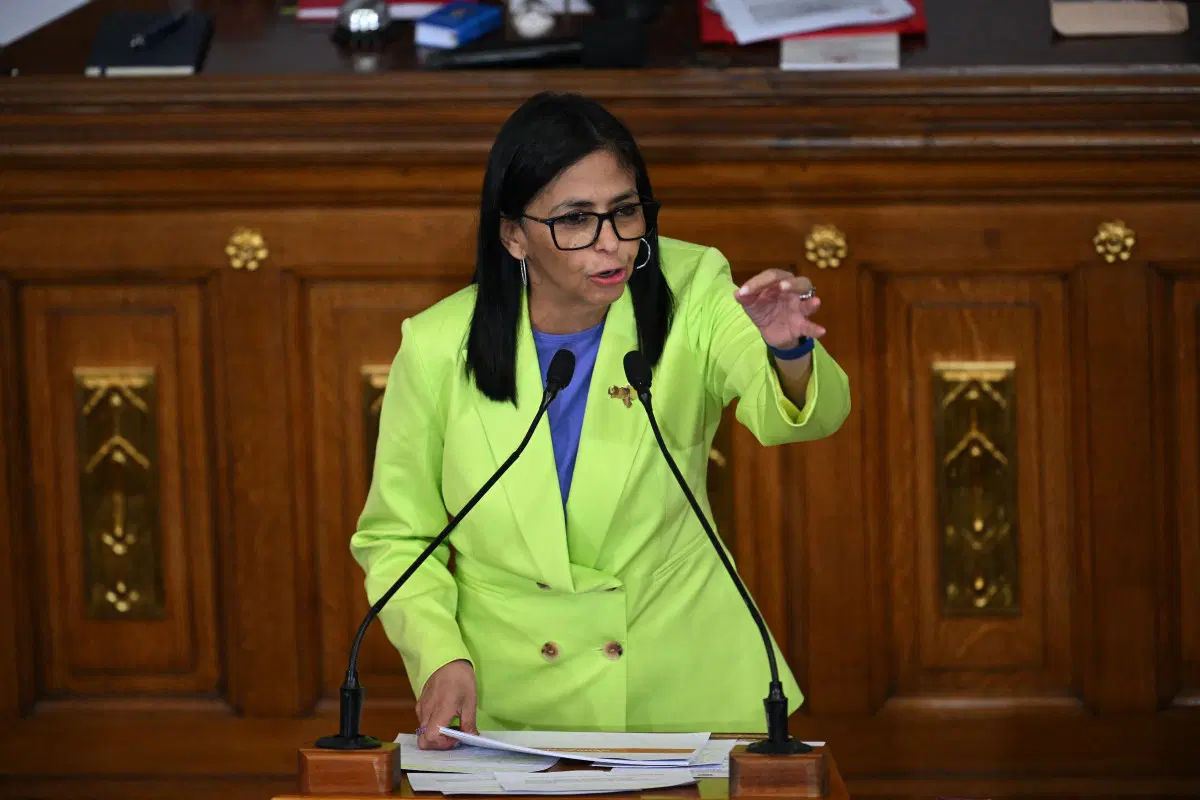
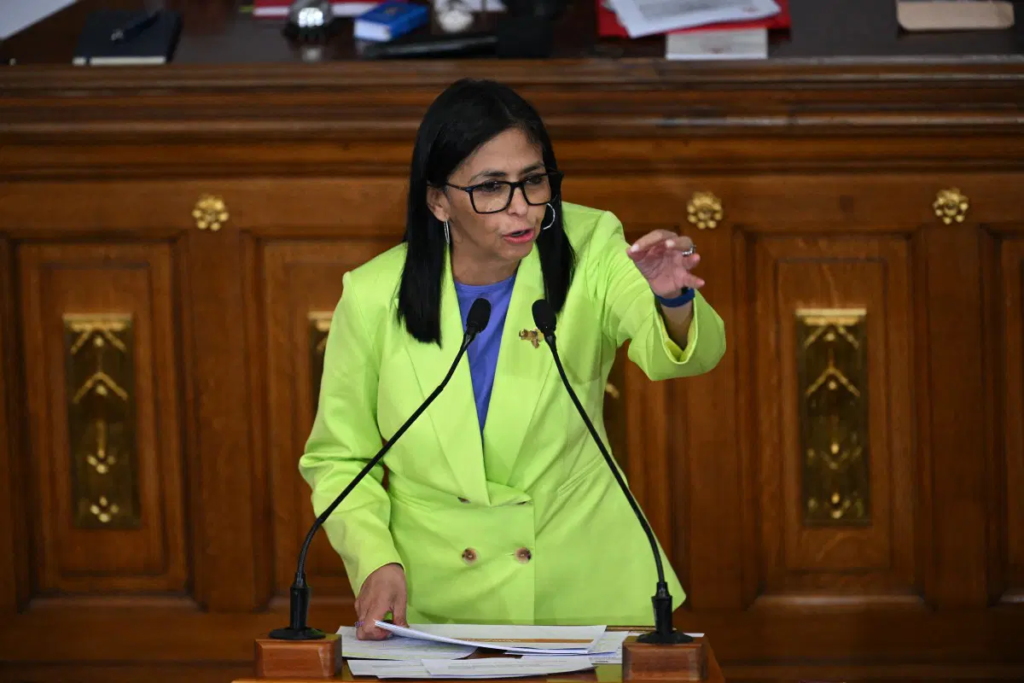
With the exception of presidents attending UN sessions in New York, Delcy Rodriguez would be the first sitting president of Venezuela to travel to the United States in over 25 years.
She declared on Wednesday that she went into any conversation with the US “without fear.”
Rodriguez stated, “We are in a process of dialogue, of working with the United States, without fear, to confront our differences and difficulties…and to address them through diplomacy.”
Since US Delta Force agents stormed into Caracas, apprehended President Nicolas Maduro, and transported him to a US jail to face drug trafficking charges, Washington and Caracas’ relationship has drastically changed. This is reflected in the invitation.
Before taking on the role of interim president, Rodriguez was a longtime insider in the authoritarian and anti-American administration of Venezuela and a former vice president.
The United States continues to impose penalties on her, including an asset freeze.
Rodriguez appointed 12 senior officers to regional commands on Wednesday, starting the process of restructuring the military forces’ leadership.
She has made it possible for the US to enable foreign investment, sell Venezuelan oil, and free dozens of political prisoners while a flotilla of US warships lingers off the country’s coast.
Rodriguez will travel shortly, but no date has been announced, according to a senior White House official.
All for oil: Prior to the rise of populist leader Hugo Chavez, the last bilateral visit by a sitting Venezuelan president was in the 1990s.
Since then, successive Venezuelan administrations have deliberately disregarded Washington and established strong connections with US adversaries in China, Cuba, Iran, and Russia.
Rodriguez may face difficulties within the administration, where some hardliners still despise what they see to be Washington’s hemispheric imperialism, as a result of the US visit, which Venezuelan authorities have not yet announced.
Both Defense Minister Vladimir Padrino Lopez and Interior Minister Diosdado Cabello are still influential figures in the nation, and observers say it is unlikely that they will endorse Rodriguez.
During his weekly state television show on Wednesday night, Cabello refuted rumors that he had talked with US officials prior to Maduro’s removal.
It’s a campaign. “Diosdado met with the United States,” they say.He remarked, “I haven’t met with anyone.”
As long as the United States maintains access to Venezuelan oil, which has the world’s largest proven reserves, Trump has so far been content to let Rodriguez and a large portion of the oppressive government stay in power.
Earlier this month, Trump welcomed Maria Corina Machado, the Nobel Peace Prize winner and head of Venezuela’s opposition, to the White House.
He added on Tuesday that he would “love” to have Machado “involved in some way” after first discounting her capacity to command the nation’s formidable military and intelligence services.
Many believe that Machado’s party won the 2024 elections, which Washington said Maduro rigged.
According to some, Trump’s support for Rodriguez and reluctance to implement a complete regime transition can be attributed to his reluctance to repeat the mistakes experienced during the fall of Saddam Hussein in Iraq.
According to Benigno Alarcon, a politics specialist at the Andres Bello Catholic University in Caracas, “those kinds of intervention operations — and the deployment of troops for stabilization – have always ended very badly.”
However, Trump’s position has infuriated democratic campaigners who demand that Venezuela hold new elections and that all political prisoners be released and awarded amnesty.
AFP