






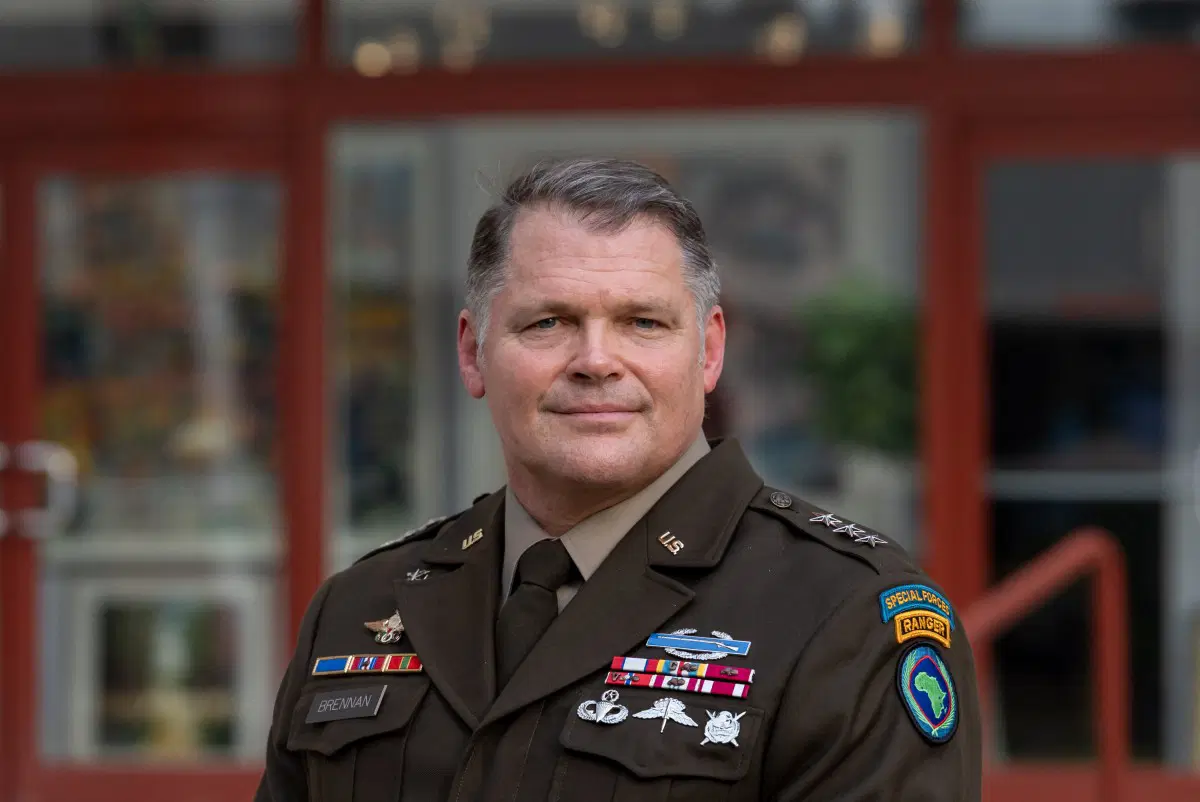

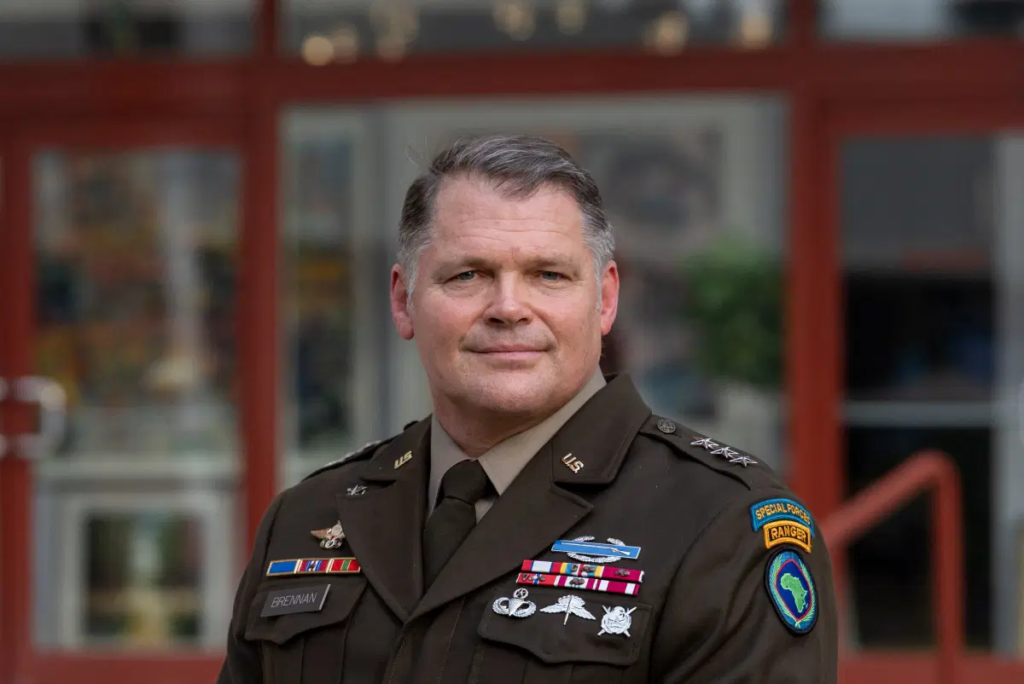
Africom’s deputy commander told AFP that as part of a larger American effort to collaborate with African militaries to pursue extremists connected to the Islamic State, the US military is stepping up material delivery and intelligence sharing with Nigeria.
According to Lieutenant General John Brennan, the Pentagon has maintained open channels of communication with the armed forces in the junta-run Sahel nations of Burkina Faso, Niger, and Mali.
The US military is becoming “more aggressive” in its pursuit of IS-affiliated targets on the continent, which coincides with Washington’s diplomatic pressure on Nigeria on terrorist bloodshed in the nation.
In an interview conducted last week outside of a US-Nigeria security meeting in the country’s capital, Brennan stated that under the Trump administration, “we’ve gotten a lot more aggressive and (are) working with partners to target, kinetically, the threats, mainly ISIS.”
“The problem set is linked from Somalia to Nigeria.” Thus, we’re attempting to dissect it and then give partners the data they require,” he continued.
“In order for them to be more successful, it has been about more enabling partners and then giving them equipment and capabilities with less restrictions.”
About a month after the US announced surprise Christmas Day strikes on IS-linked targets in northwest Nigeria, the first US-Nigeria Joint Working Group meeting took place last week.
Diplomatic clash: Despite the fact that both military appear eager to work together more following the combined strikes, Washington’s diplomatic pressure over what Trump alleges is the mass murder of Christians in Nigeria looms over everything.
Abuja and independent scholars disagree with the US religious right’s long-standing conceptualization of Nigeria’s numerous overlapping conflicts.
At the Joint Working Group conference in Abuja, Allison Hooker, number three at the State Department, encouraged the Nigerian government “to protect Christians” in a speech that omitted any mention of Muslim victims of armed groups, demonstrating charged politics.
The most populous nation in Africa is divided almost evenly between a predominantly Christian south and a predominantly Muslim north. In a nation that has witnessed sectarian warfare throughout its history, religious and ethnic identity is still a delicate subject, despite the fact that millions of people coexist peacefully.
US intelligence will not be restricted to safeguarding Christians, Brennan told AFP.
Additionally, he stated that in the wake of the US strikes in northwest Sokoto state, future US assistance would concentrate on exchanging intelligence to help Nigerian airstrikes there and in the northeast, where a jihadist insurgency led by rival factions ISWAP and Boko Haram has been raging since 2009.
He described Islamic State West Africa Province (ISWAP) as “our most concerning group.”
In recent months, analysts have been monitoring US intelligence flights over the nation; nevertheless, some have questioned if air support alone can drive back armed groups that flourish in rural areas amid widespread poverty and state failure.
“Still collaborate” with AES militaries. According to Brennan, future US-Nigerian collaboration will encompass “the whole gamut of intelligence sharing, sharing… tactics, techniques, and procedures, as well as enabling them to procure more equipment.”
According to Brennan, the initial attacks targeted militants associated with the Islamic State Sahel Province, which is usually active in neighboring Niger.
The development of ISSP from the Sahel into coastal west African nations like Nigeria has alarmed analysts.
However, local and foreign journalists have not been able to confirm militant casualties, making the impact of those strikes unclear thus far.
Nigerian Information Minister Mohammed Idris stated last week that they were “still a work in progress” when asked about their efficacy.
Brennan stated that “we still collaborate” with the junta-led governments in Burkina Faso, Mali, and Niger, who have severed ties with their neighbors in West Africa and mainly avoided the West.
Since coups overthrew civilian governments in all three nations between 2020 and 2023, security cooperation has decreased.
He claimed, “We have actually given some of them information to attack important terrorist targets.” “Even though it’s not official, we continue to communicate with our military partners throughout the Sahelian states.”
Additionally, Brennan stated that the US is not looking to replace its outposts in Niger following the expulsion of its troops by the local junta.
In reference to the US drone operations that have been shut down in Agadez, he stated, “We’re not in the market to create a drone base anywhere.”
“We are far more concerned with getting capability to the appropriate location at the appropriate time and then departing. We don’t want to have a long-term presence in any of the western African nations.