



Well.calls for social healing, recovery equality, and unity of purpose.
Written by Clifford Ndujihe
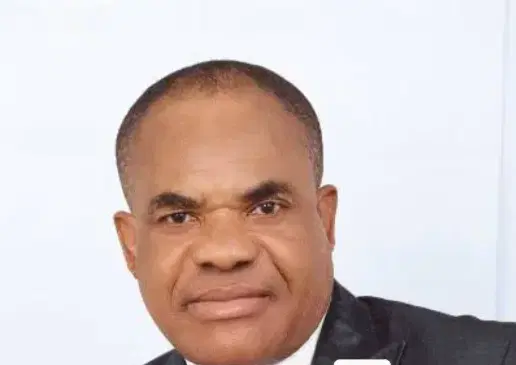
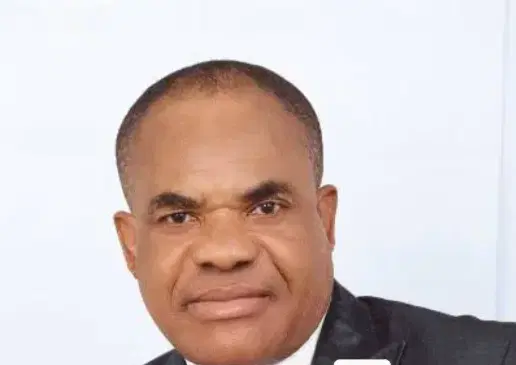
Insisting that only unity of purpose, internal reform, and level playing fields can restore the people’s lost relevance, Dr. Iwuchukwu Ezenwafor, the leader of the Igbo Re-invention Movement (IRM), an Igbo socio-political pressure group, has warned that the unresolved effects of the Nigerian Civil War continue to haunt the Igbo socially, economically, and politically.
Evangelist Ezenwafor claimed in a statement titled “Igbo Conundrums: The Tactical Curative” that the fall of Biafra prevented the emergence of Africa’s first really viable nation state and left behind severe wounds that are still felt throughout Nigeria and the continent.
He claims that the “yawning vacuum” left by the conflict has resulted in widespread poverty, social upheaval, and political marginalization—not just among the Igbo but also throughout sub-Saharan Africa.
“The psychological injury is still leaking.”
Ezenwafor claimed that the carnage and humiliation perpetrated on the Igbo people during the war caused a terrible psychological blow to them, distorting social values and eroding their collective sense of self-worth.
Many people lost their innate sense of self-worth because of the severe psychological damage. Trauma, despair, and even aberrant behavior resulted from this, he claimed.
He bemoaned the decline of traditional Igbo unity and communal ties over the years, fostering an environment of “everyone for himself,” where honor, integrity, and dignity were no longer easily separated from criminality and infamy.
“Today, it is hard to tell the difference between crime and prosperity because our value system has become so corrupted. “Dignity and integrity have become meaningless words,” he continued.
After the war, economic emasculation
Regarding the economy, Ezenwafor claimed that the renowned Igbo spirit of self-reliance and enterprise was severely damaged by the Civil War.
The carpet was torn out from under us by the war. Many people who were financially secure overnight started to experience distress. He claimed that losing political power was not as terrible as that shock.
Recalling the post-war policy that restricted Igbo bank deposits to £20, he said it was a deliberate attempt to economically emasculate the populace for good.
According to him, the absence of a level playing field forced many Igbos into extreme hustle for survival, sometimes pushing ingenuity into negative directions.
“The denial of a level-playing field, which is the essence of free market economy, remains the worst incapacitation the Igbo have suffered,” he said.
By design, political exclusion
Ezenwafor also linked the purposeful post-war strategy that took advantage of Nigeria’s numbers-based democracy to keep the Igbo out of power indefinitely to the Igbo’s political marginalization.
He pointed out that long before colonization, traditional Igbo society was democratic and republican, with age-grade legislatures, consensus-based governance, and priestly judicial systems.
No matter how impoverished, the typical Igbo individual can never give up his independence or his ability to make his own decisions. That’s just who we are,” he remarked.
Nonetheless, he maintained that post-war politics and colonial preferences worked together to thwart Igbo involvement at the center.
Things deteriorated considerably as the Igbo people battled to rejoin the mainstream of national politics. After a while, the home started to fight itself out of frustration. The Igbo have essentially lost their political voice today,” he said.
Demand unity and internal reform
The IRM leader stated that recovery was still feasible if the Igbo people started a conscious social reformation and communal healing process, notwithstanding the pessimistic evaluation.
It is our responsibility to foster genuine reintegration, unity, and kinship among our people. “Only through collective and persistent effort can social healing occur,” he stated.
He maintained that because of their tenacity and capacity for entrepreneurship, the Igbo could quickly industrialize sub-Saharan Africa given the right conditions and political determination.
According to Ezenwafor, “the Igbo can drive economic emancipation across Africa with a level playing field.”
Be mindful of agitation and seek divine guidance.
Ezenwafor cautioned against moves that would result in a Pyrrhic victory in response to the growing movement for self-determination.
“The attempt to use war to achieve political deliverance was unsuccessful. Thus far, nonviolent agitation has not produced any outcomes. “Unity of purpose—acting as one people—is what we haven’t tried fully,” he remarked.
He added that, through what he called “divine orchestration,” Nigeria had arrived at a crucial juncture.
“Nigeria is dominated by a single heavenly interest. Every strategy and tool used by interest groups is falling apart. He said that only those with stiff necks would be affected.