


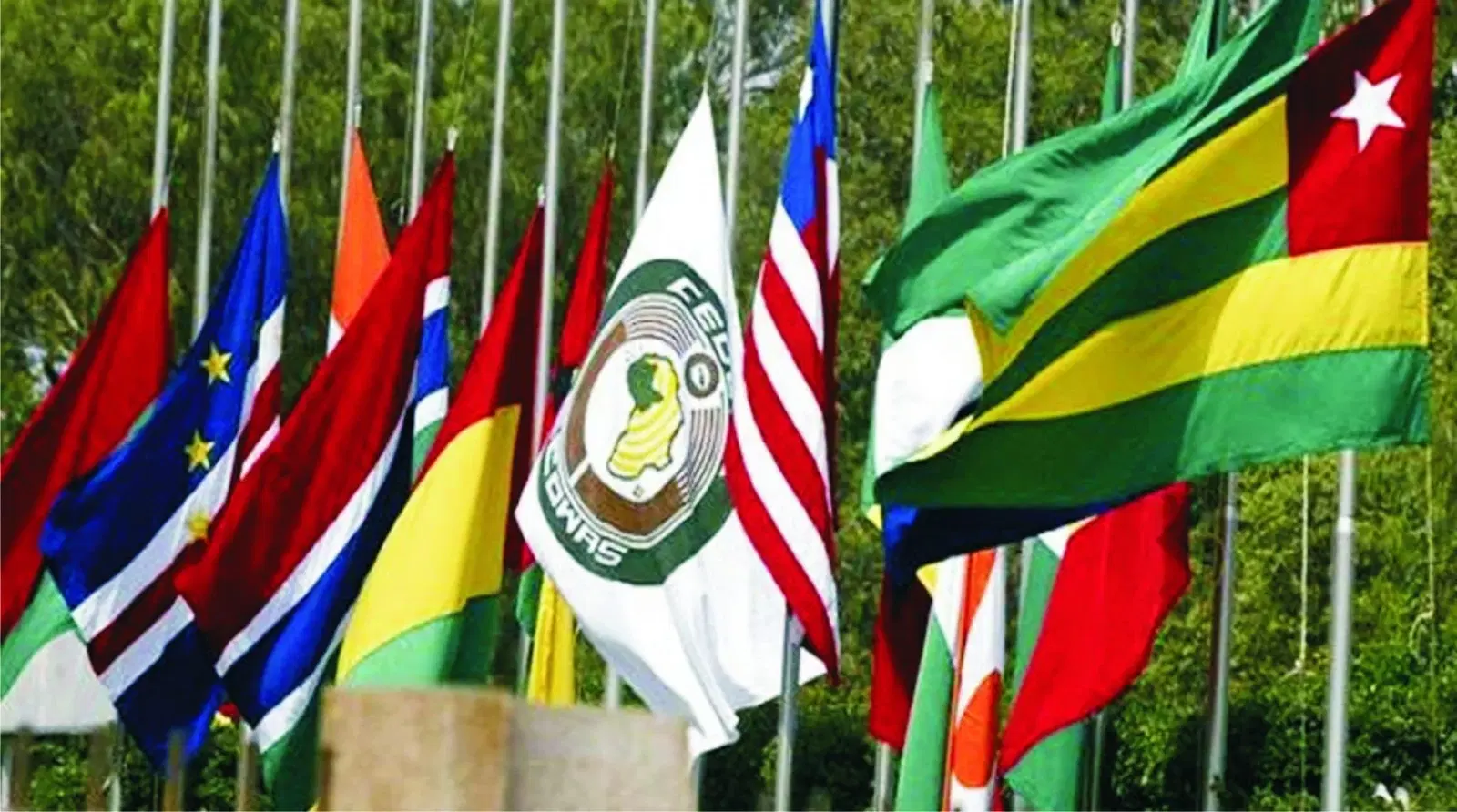
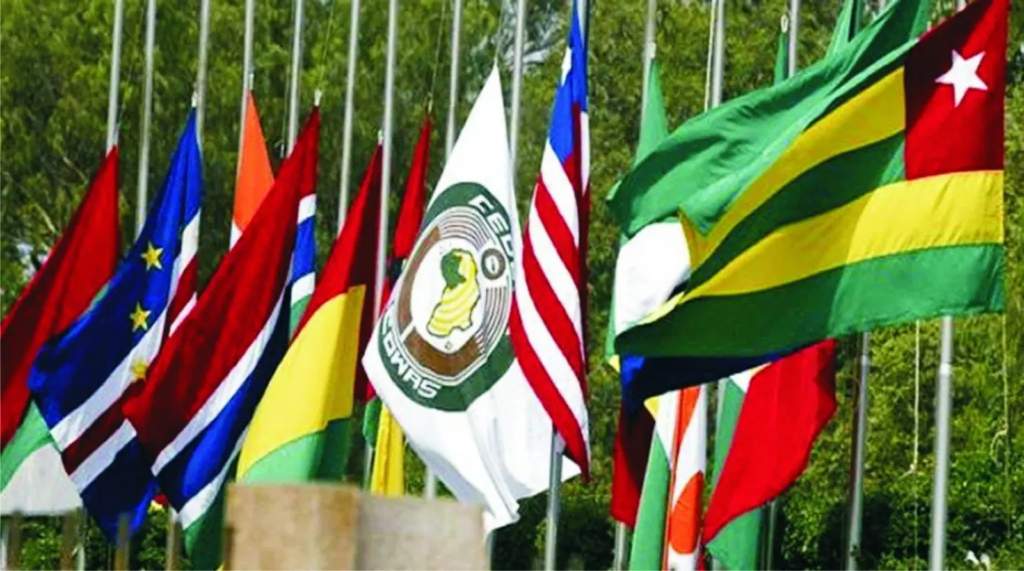
Despite global economic concerns, ECOWAS President Dr. Omar Touray reports that the bloc’s economy grew by 4.6% in 2025 and plans to rise by 5% in 2026.
During a meeting with development partners on Thursday in Abuja, Touray revealed this while emphasizing the commission’s 2025 Annual Report.
According to him, structural changes, increased investment in mining and energy, better regional trade facilitation, and a robust recovery in services, transportation, and tourism helped ECOWAS surpass the continental average in 2025.
“Structural reforms, increased investment in mining and energy, improved regional trade facilitation, and a strong rebound in services, transportation, and tourism are the driving forces behind this robust performance,” he stated.
He claims that while inflation is still high in certain member states, it has decreased in others as a result of better food supply conditions and coordinated monetary measures.
“Our fiscal deficits have narrowed significantly as governments strengthen revenue mobilisation and rationalise public expenditure,” Touray said.
He said, “Our debt-to-GDP ratio has also slightly decreased, reflecting strong nominal growth and improved macroeconomic management.”
He pointed out that the subregion’s external situation was still solid, with a stronger current account surplus backed by substantial export revenue from bauxite, gold, and oil.
“We are gathering during a period of significant change in the world economy.
“The global economic system continues to be reshaped by geopolitical tensions, supply chain restructuring, and the rapid acceleration of digital and green transitions,” he stated.
He added that although inflation had somewhat decreased in 2025, global growth had slowed and uncertainty was still high, but Africa had continued to show resilience.
However, Africa continues to show incredible fortitude in the face of these worldwide challenges.
The president of the commission stated that “growth is recovering, inflation is declining, and political stability has improved in a number of countries.”
In 2025, ECOWAS stepped strengthened its preventive diplomacy, mediation, and democratic support throughout the region, according to Touray, who also stated that peace and security remained at the center of the bloc’s mandate.
He emphasized, “Peace and security remain at the heart of our mandate, because insecurity in parts of the region remains a major concern.”
However, Africa continues to show incredible fortitude in the face of these worldwide challenges.
The president of the commission stated that “growth is recovering, inflation is declining, and political stability has improved in a number of countries.”
In 2025, ECOWAS stepped strengthened its preventive diplomacy, mediation, and democratic support throughout the region, according to Touray, who also stated that peace and security remained at the center of the bloc’s mandate.
He emphasized, “Peace and security remain at the heart of our mandate, because insecurity in parts of the region remains a major concern.”
He stated that while maintaining avenues for positive interaction, ECOWAS would continue to handle the fallout from the departure of its three Sahel State members, Burkina Faso, Mali, and Niger.
Touray revealed that the ECOWAS Committee of Chiefs of Defense Staff had finished the Standby Force’s rotation and strengthened preparations for the 1,650-person Counterterrorism Brigade as well as the Standby Force.
He noted that after 12 years under Interpol, ECOWAS officially took over the West Africa Police Information System, demonstrating progress in the fight against terrorism and organized crime.
However, he pointed out that counterterrorism measures were made more difficult by the Alliance of Sahel States’ decreased collaboration as a result of their departure.
According to Touray, “fatalities increased due to the rising use of improvised explosive devices, while attacks declined slightly.”
Regarding governance, Touray stated that ECOWAS assisted a number of member nations, such as Guinea, Guinea-Bissau, and Côte d’Ivoire, with electoral planning, transitions, and reforms.
The inauguration of the second phase of the pre-movement and migration project and the approval of the ECOWAS Visa Online approach, he said, were examples of the bloc’s consistent development in economic integration.
“The ECOWAS National Biometric Identity Card is currently being implemented in seven of our member states, with the Federal Republic of Nigeria being the most recent,” he stated.
More than 1,300 small-scale cross-border traders and 50 women-led SMEs benefited from capacity-building programs, according to Touray, while digital skills training increased opportunities for rural women as a result of ECOWAS’ support for women and youth.
He claims that the commission increased drug rehabilitation programs to ten locations throughout the region and allocated roughly $8 million to catastrophe risk reduction and humanitarian situations.
Regarding regional infrastructure and energy, the head of the commission stated that ECOWAS raised more than $42 million for advanced preparations for the Praia–Dakar–Abidjan Corridor and regional road network preparatory studies, with help from the African Development Bank.
He reiterated that unconstitutional changes of government will not be tolerated by ECOWAS.
“There is now zero tolerance for anti-constitutional behaviour in the region.
He declared, “ECOWAS stands for no coups, and we will continue to maintain that position.”
He advocated for a brief transition headed by an inclusive government with a limited mandate to carry out electoral and constitutional reforms in response to current political developments in Guinea-Bissau.
Additionally, Touray declared that sanctions against the Republic of Guinea had been removed after the country held successful elections.
“I am sitting in front of the Guinea ambassador at an ECOWAS meeting for the first time since I arrived in the organization.
He declared, “Guinea has been accepted back as a full-fledged member of ECOWAS.”
Despite the significant obstacles it encountered in 2025, Touray expressed satisfaction with the sub-region’s progress and said it was encouraging to see that the bloc was still on track.
“The progress described demonstrates our community’s tenacity, will, and cohesion.
The goal of a rich, peaceful, and completely integrated West Africa is still achievable, he continued. (NAN)