



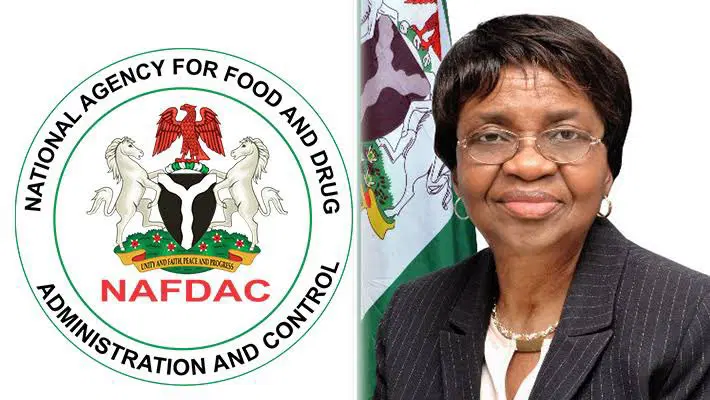

On Thursday, the National Agency for Food and Drug Administration and Control, or NAFDAC, resumed full enforcement of the ban on alcoholic beverages packaged in sachets and small plastic or glass bottles under 200 milliliters. The agency insisted that no company that produces alcohol has been shut down and that the action is only being taken to protect children and other vulnerable groups from the harmful use of alcohol.
The Federal Ministry of Health and Social Welfare supports the enforcement, which complies with a Nigerian Senate directive.
According to NAFDAC, the action is in line with its legal obligation to protect Nigerians from alcohol abuse, especially children, adolescents, and young people.
Director-General of NAFDAC Prof. Mojisola Christianah Adeyeye dismissed claims that the agency had sealed alcohol factories, stressing that only specific packaging formats are affected.
“No alcohol manufacturing company was shut down by NAFDAC. Alcohol in sachets and small containers less than 200 milliliters is prohibited, according to Adeyeye.
She clarified that the broad availability of beverages with a high alcohol content in sachets and small bottles has made alcohol inexpensive, accessible, and concealable, which has led to an increase in its misuse by juveniles and certain commercial drivers. She claims that the tendency has been connected to an increase in addiction, marital violence, auto accidents, school dropouts, and other social vices nationwide.
The head of NAFDAC stated, “This ban is protective, not punitive.” By prohibiting alcohol in tiny pack sizes, it is intended to protect the health and future of our children and young people. The choice is based on public health concerns and scientific data. Nigerians’ well-being cannot be sacrificed for financial gain. A country’s ultimate prosperity lies in its health.
Adeyeye denied claims that warning labels like “Not for Children” could reduce consumption by minors, pointing out that it is still not feasible to implement such labels in Nigeria.
“Because the pack size is inexpensive and easily concealed, many parents are unaware that their children consume alcohol in sachets,” she stated. Students conceal sachet alcohol, according to school reports. Recently, a teacher stated that a student claimed he had to take sachet alcohol before sitting for an exam.
She emphasized that enterprises had been given years to modify their production lines and underlined that the program was not abrupt. A five-year Memorandum of Understanding with industry groups was signed in December 2018 by NAFDAC, the Federal Ministry of Health, and the Federal Competition and Consumer Protection Commission to phase out sachet and small-volume alcohol packaging by January 31, 2024. Later, the prohibition was prolonged until December 2025.
Adeyeye stated, “The current Senate resolution aligns fully with the spirit and letter of that agreement.” The action also fulfills Nigeria’s commitment to the World Health Assembly Global Strategy to Reduce the Harmful Use of Alcohol, which places a high priority on protecting vulnerable populations.
She emphasized that the goal of the prohibition is to make alcohol less accessible to minors, pointing out that NAFDAC still approves alcoholic beverages in larger pack sizes.
Children can easily hide alcohol from parents and instructors thanks to the small size of sachets. “Bigger pack sizes don’t,” she stated.
NAFDAC reaffirmed that the legislation only affects two package formats: small PET or glass bottles under 200 milliliters and spirit drinks in sachets. They also issued a warning that the phase-out deadline will not be extended past December 2025.
The organization stated that it would keep collaborating with the Federal Ministry of Health and Social Welfare, the Federal Competition and Consumer Protection Commission, and the National Orientation Agency to raise awareness of the social and health risks associated with alcohol abuse across the country.
According to Adeyeye, “NAFDAC remains resolute in ensuring that only safe, wholesome, and properly regulated products are available to Nigerians.”