



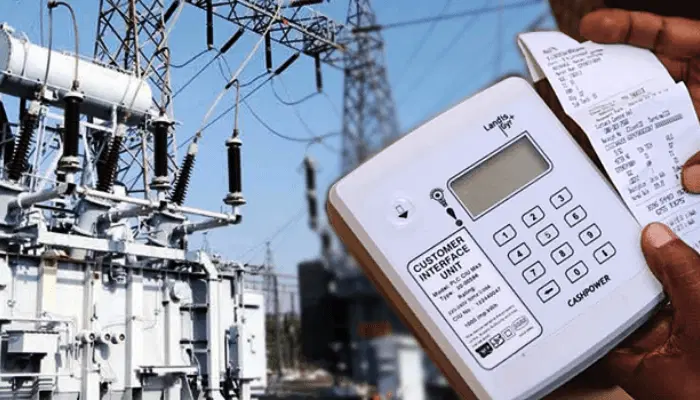
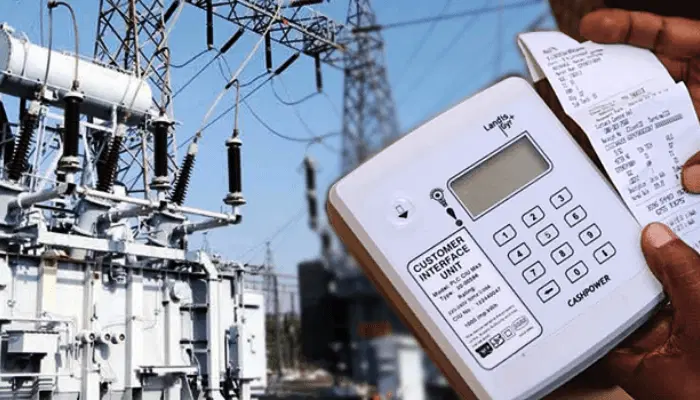
By Emma Ujah, Abuja Bureau Chief, Udeme Akpan, Obas Esiedesa & Ediri Ejoh ABUJA — President Bola Tinubu has ordered that state governments and the federal government share the cost of electricity subsidies.
Vanguard learned that the Power Assistance Consumers Fund, or PCAF, will now provide the money needed to pay the subsidy.
In order to improve energy access and stabilize the electricity sector by funding targeted support rather than universal subsidies, PCAF is a government-backed financial pool created to subsidize electricity bills for low-income and vulnerable households in order to ensure affordability in the face of rising tariffs.
There are currently over 18 states running their regulatory agencies, and others are in the process of doing so.
State governments that benefited politically from the electricity subsidy must also contribute to closing the gap created by the subsidy and cannot be left to the Federal Government alone, according to Mr. Tanimu Yakubu, Director-General of the Budget Office of the Federation, or BoF, who made this announcement yesterday at the opening of the 2026 Post-Budget Preparation using Government Integrated Financial Management System, or GIFMIS, workshop in Abuja.
“Mr. President has directed that we operationalize a clearer framework to share the cost of electricity across the federation, so the burden is not treated as an open-ended fiscal residual,” he stated in an address read on his behalf by Mr. Yusuf Muhammad, Director of Expenditure Social. Federal residual, that is. I’ll be honest.
“We have to pay for the decisions we make if you want a stable power sector. There is a gap when tariffs are kept at low cost. A bill is a subsidy, and that gap is a subsidy.
“In 2026, we will no longer pretend that the Federal Government can handle this bill on its own, particularly in cases where policy decisions or political advantages are distributed among governmental levels. In order to make burden-sharing realistic and transparent, Mr. President instructed us to use the legal framework for the electrical industry.
This means that in order to avoid arrears liquidity crises or hidden liabilities in the market, subsidy costs must be clear, managed, and funded. Additionally, if any level of government decides to implement an affordable intervention, the obligation must be explicit, unambiguous, and enforceable. This isn’t a form of discipline. It’s an alignment.
“Everyone has an incentive to support cost-effective, efficiency-targeted protection for the vulnerable and empower market that can genuinely deliver for MDAs when everyone bears a fair part of the costs.
“The implication is straightforward: it makes costs associated with subsidies transparent in your planning and submission. Avoid putting liabilities on the market as unfunded commitments or arrears. Encourage open rule-based financing and attribution of affordability decisions.
The D-G added that the President gave the BoF and the MDAs instructions to examine the Fiscal Responsibility Framework in order to increase the dynamism of fiscal laws.
“Fiscal regulations are the cornerstones of government, not just a catchphrase. Without boundaries, debt becomes casual, spending becomes impulsive, and the budget stops being an instrument for delivery and instead becomes a declaration of intent.
However, rules also need to be intelligent. They have to react to fluctuations without giving way under duress. For this reason, the 2026 plan calls for modernizing regulations rather than doing away with them in order to make them applicable in Nigeria today.
The President has instructed that the Fiscal Responsibility Framework be reviewed in order to make it more dynamic and enforceable. This entails more precise fiscal anchors, more precise escape provisions for real shocks, and a reliable route back to compliance when those clauses are applied.
Stronger reporting, stricter oversight of contingent liabilities, and a more solid connection between the medium-term framework and yearly appropriations are all consequences of this.
This alters the dialogue for MDAs. You won’t only be asked how much you would like to spend. You’ll be questioned about how it makes sense financially, how it impacts sustainability, and what quantifiable outcomes it will produce,” he said.
The D-G states that in 2026, capital plans must be prepared for delivery and, if necessary, financing.
“A lengthy list of projects is not a development strategy,” he stated. It is frequently a map of disillusionment. What the public perceives as delivery is finished roads, dependable electricity, operational schools, and operational hospitals.
Therefore, we are making a significant shift in 2026 from project naming to project finance and delivery. Project funding becomes crucial at this point. It is a discipline, not a catchphrase. In order to attract the appropriate mix of funding—budget, PPPs, blended finance, guarantees, and counterpart resources, where applicable—projects must be appropriately scoped, costed, sequenced, and packaged.
It refers to preparedness, which includes designs, approvals, a procurement plan, and a schedule for implementation. It denotes bankability through transparent governance, risk allocation, and a believable revenue or service-payment rationale.
Prioritization means fewer initiatives that are better funded and executed. If we accomplish this, the budget is no longer a list of incomplete tasks but rather a pipeline for completion. In 2026, Mr. President wants MDAs to adopt that project-financing mindset.
State electrical regulatory commissions and NGF evaluate the ruling
Yunusa Abdullahi, Director of Media and Communications at the Nigerian Governors’ Forum (NGF), responded to the incident yesterday by saying, “We are reviewing the context and content of the information.” We will not be making further comments on it.’’
In a same vein, yesterday’s emergency virtual meeting of the State Electricity Regulatory Commissions (SERCs) in Lagos, Imo, Enugu, Ekiti, Oyo, Ondo, Edo, Niger, and Anambra was convened to assess the situation and choose the best course of action.
“We cannot make our official position known immediately,” stated a member who begged to remain nameless. We are currently meeting to discuss it after hearing it for the first time. Before we react or respond to the problem, we must comprehend it.
As active partners, states ought to provide subsidies — CPPE
According to Dr. Muda Yusuf, CEO of the Center for the Promotion of Private Enterprises (CPPE), states should be prepared to take on active roles in the industry, including bearing the burden of subsidies.
“The model we had with the first subsidy is not different from this model,” he stated. As you are aware, the first subsidy was paid for by all states and local governments involved in FAAC allocation since the NNPC, which was meant to be sending money to the federation account, failed to do so.
“I think the similar situation is set to occur with regard to power subsidy since when the first subsidy ended, NNPC was able to remit much more and the states were receiving more cash.
Additionally, the numbers are increasing daily. We were previously informed that the gas providers and GENCOs owed over five trillion naira. As of June or September of last year, the Federal Government was required to issue a bond to that effect, which is what we are witnessing today.
The numbers will have increased since then. Therefore, a subsidy system that is clearly difficult for the federal government to maintain on its own is not very sustainable, but changing it at this time is not politically practicable.
This is because the effects of previous changes on the residents’ wellbeing and actual income have not yet been fully recovered from.
Since this is a pre-election year, the government will also have to deal with this issue. They are all tightly related, from those who supply gas to those who generate it, to those who transit it and distribute it.
This chain is intricately interconnected. And when the chain breaks, the electrical system fails.
But it’s a sector that requires more thorough and fundamental adjustments. However, I doubt that those reforms can proceed as swiftly as we would like, especially at this point in time.
This is a significant policy issue. However, considering the rate at which power subsidies have been increasing, I believe that decision is practically inevitable. All the stakeholders have been discussing cost-reflective tariffs and other ideas, but I don’t think it is now realistic. That presents a difficulty.
This is a significant political and financial change – Prof. Iledare
In a similar vein, Prof. Wumi Iledare of FUPRE Energy Business School and Executive Director of the Emmanuel Egbogah Foundation stated: “This is a big fiscal and political shift.” It effectively says that states now have to pay for power subsidies, which were previously solely the responsibility of the federal government.
“That raises difficult questions, but it fits with the new electricity reforms where states have more power-sector authority.”
“How will the formula for sharing operate? Richer states are able to bear a greater burden than poorer ones. Is it even feasible for governments to do this without incurring additional debt? What incentives are produced by this?
States will probably move more quickly toward reasonable tariffs, focused subsidies, and local power investments if they are required to co-pay.
Therefore, this might either make the situation worse or ultimately compel greater accountability and discipline in the funding of electricity. Whether the structure is open, rule-based, and free from political bargaining determines the result.
Experts question FG’s ability to compel states to provide electricity subsidies.
Speaking on the subject as well, Mr. Bode Fadipe, a lawyer and Lead Consultant at Sage Consulting on Power Sector Advocacy and Advisory, voiced concerns about the policy’s implementation, pointing out that the federal government still has the final say on electricity subsidies.
Fadipe questioned whether the federal government has the constitutional right to control how states allocate their financial resources.
“That is a serious issue when you are asking states to contribute to electricity subsidy payments or take on a portion of the subsidy,” he said. What will serve as the foundation? Will it be determined by what the states or their indigenous people eat?
Since it is not their facility that transmits the energy we are discussing, it is a little unclear to begin speculating about how governments would handle this. How state governments can now take on such a duty is uncertain.
Maybe it will be more evident what the Federal Government wants to do once we read the policy and the implementation guidelines.
However, does the federal government have the authority to direct state spending? These are essential problems that require attention.
Fadipe pointed out that the Federal Government still has authority over the wholesale electricity market in light of the issue surrounding the Enugu Electricity Regulatory Commission’s (EERC) attempts to fix energy pricing last year.
“The wholesale market is still a federal government market,” he stated. When the subject of how much electricity was consumed by State A, State B, or the Federal Capital Territory reaches the distribution level and it is decided that the states should pay 10 or 20 percent, it must be optional.
“A federal directive is not an option. At the wholesale level, the Federal Government is worried about the recovery of its funds. It should not matter who pays what.
“The Enugu problem is extremely evident. Enugu was unable to get a subsidy for a commodity that it did not own. It must be willing to cover the difference resulting from that choice if it wishes to do so.
According to Lanre Elatuyi, an expert on the power market, the Federal Government may only implement such a policy by directly deducting funds from state allocations through the Federation Account Allocation Committee, or FAAC.
Elatuyi cautioned that since states will require precise information on the amount of electricity used within their borders, this strategy could result in conflict.
“I think it is fair for states to also contribute to electricity subsidy payments, and FAAC deductions are one way to do this. The amount of debt in the electricity industry has demonstrated that the federal government is no longer able to provide subsidies on its own. “The Electricity Act gives states the authority to create and manage their own electricity markets, so they can determine the percentage of subsidy they are willing to pay,” he continued.