




Amid heated discussions about the electronic transmission of election results, President Bola Tinubu signed the Electoral Act 2026 (Amendment) into law on February 18, 2026.
Less than a day has passed since the law was approved by the National Assembly.
Although the law requires results to be transmitted electronically, manual collation is permitted in the case that upload is prevented by BVAS/IREV faults or network problems.
In an effort to promote a free and fair election, civil society organizations and certain opposition figures have long advocated for the real-time transfer of polling station results to the central server of the Independent National Electoral Commission (INEC).
Beyond laws, the debate over electronic results transmission focuses on whether technology can actually solve the issue of election results manipulation.
Nigeria’s Shift From Conventional To Digital Elections In 2020, INEC used IREV for the Nasarawa Central by-election.
Before being extended to additional off-cycle elections, BVAS was initially implemented as a pilot during the September 2021 by-election for the Isoko South State Constituency in Delta State.
The objective was to switch to technology-driven voting from the conventional election process.
In order to allow residents and stakeholders to track election results in almost real time, the IREV portal was created to allow polling unit results to be uploaded and seen by the public.
Comprehending IREV and BVAS
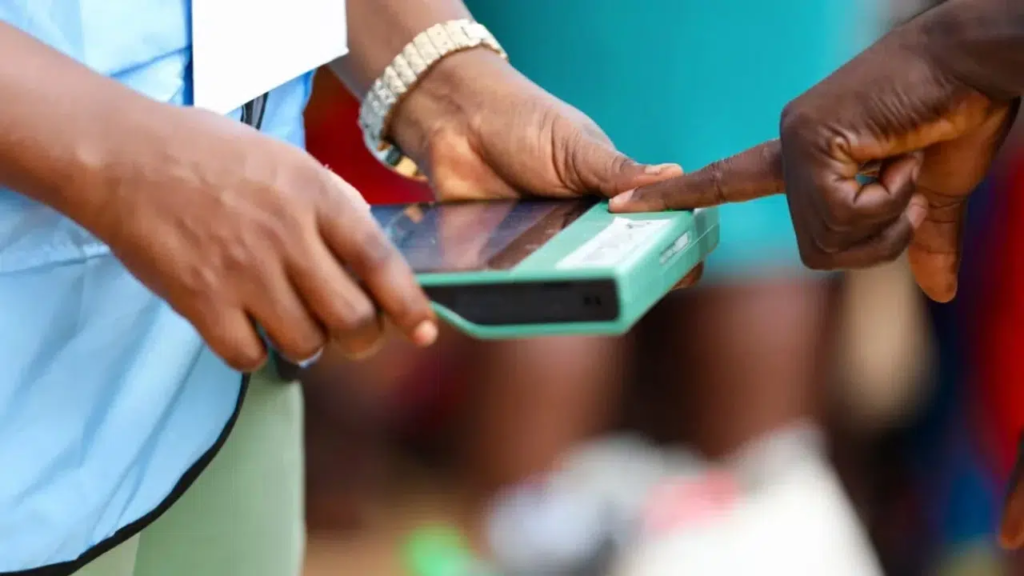
Voters are accredited by BVAS by facial recognition and fingerprints. It retains results until they are uploaded and functions momentarily without the internet. Results are posted to IREV for central compilation and public viewing following accreditation and voting.
Notwithstanding these characteristics, BVAS has encountered several operational difficulties since launch. In Rivers State’s general election of 2023, BVAS failed to deliver reliable voter data, and in several instances, the equipment malfunctioned for an extended amount of time. Additionally, it was unable to verify voters’ fingerprints and facial features. As a result, the voting process was temporarily suspended. Many of the voters in Obio/Akpor LGA’s wards 15 and 16 were unable to be accredited by the BVAS machine. The polling station was in disarray as a result of this mishap.
Additionally, it was noted that the BVAS malfunctioned in Unit 3, the Okolile village, keeping a large number of voters waiting. The issue began at 12:10 p.m. The machine issue also caused delays for voters in Ward 4, Khana Local Government Area, including Nyesom Wike, the governor of Rivers State at the time.
Several BVAS failures were noted by the Nigeria Civil Society Situation Room during the assembly and governorship elections held on March 18, 2023. Operational concerns at polling stations were indicated by reports of certain equipment not starting, having battery problems, or displaying voter registers that did not match the printed voter list.
According to reports from the 2021 Anambra gubernatorial election, INEC had to extend polling hours past the planned close time in order to handle the delays caused by BVAS machines malfunctioning in some regions.
Concerns over preparedness for larger polls were raised by observers and authorities who cited BVAS issues, including as sluggish response times and equipment malfunctions, during the February 2022 Federal Capital Territory Area Council elections.
Limited device non-functionality was also observed in Osun’s July 2022 election, and BVAS devices were reported to be slow or momentarily malfunctioning in select units during the June 2022 Ekiti governorship votes before being repaired.
After more than 470 voters were denied the opportunity to cast ballots because BVAS continually failed to recognize their features and fingerprints, a presiding officer fainted during an election event in Enugwu-Ukwu, Anambra State.
Public Mistrust and Opposition Voices Regarding E-Transmission
Former Labour Party presidential candidate Peter Obi led demonstrators to the National Assembly to voice their complaints after the assembly first rejected requiring the electronic transmission of election results, according to Naija News.
Human rights advocate Aisha Yesufu, former Transportation Minister Rotimi Amaechi, former Sports Minister Solomon Dalung, and Yunusa Tanko, national coordinator of the Obidient Movement, were among the other political participants who attended the demonstration.
The demonstrators contended that human error and manipulation can occur when results are manually collated. To maintain credibility and openness, they demanded that polling stations transmit electronically in real time to the INEC central computer.
The Electoral Act revision includes a clause permitting manual collation in the event of technical or network difficulties, even though the National Assembly ultimately approved electronic transmission.
Network Infrastructure: Electronic Transmission’s Weakest Link
A certain amount of openness may arise from the required e-transmission of results, but the question still stands: is Nigeria’s telecommunications infrastructure strong enough to manage a national transmission of election results?
Results must eventually be submitted to IREV for central collation and public viewing, even though BVAS devices can operate momentarily offline. Reliable internet access is necessary for this upload process, but not all polling places have it.
Nonetheless, Nigeria has enough network coverage to enable the electronic transmission of polling unit results, according to telcos that are members of the Association of Licensed Telecom Operators of Nigeria (ALTON).
“As we speak today, over 70% of the country is covered by 3G and 4G networks, 5G has reached about 11% coverage, while the remaining areas are on 2G,” said Gbenga Adebayo, the chairman of ALTON, in a statement. 2G is powerful enough to provide results electronically even in practice. A complete prohibition on electronic transmission founded on false information about our investments and infrastructure is unacceptable.
He acknowledged that operators’ capacity to maintain facilities has been hampered by security issues in some areas of the nation, especially in the two or so insurgent-affected states. However, he emphasized that these concerns should be resolved through stakeholder collaboration rather than being used as an excuse for a national ban on electronic transmission.
Why Nigeria Cannot Rely Just on Electronic Transmission as a Safety Measure
Tunji Ojo, a political analyst, was interviewed by Naija News to gain a deeper understanding of the real-world applications of electronic transmission and the difficulties presented by network architecture.
What do you think of the Senate’s decisions to authorize results transmission by electronic means while providing for manual backup?
“I completely agree with the Senate’s stance. Given our past infrastructure issues, I’m not certain that relying just on electronic transmission with no backup will be beneficial since I am aware of the kind of politicians who operate in Nigeria, who can be really desperate and undermine even the most successful elections. And once that sabotage takes place, the entire election process will be discredited if you permit them to use a one-track method to result collation and e-transmission.
I have conducted my own independent research as well, and I am aware that no nation in the world exclusively uses electronic transmission. There have always been two procedures involved. In any case, manual collation does not eliminate the multilayered process, even with electronic transmission.
Additionally, I believe that it’s better to err on the side of caution rather than relying solely on electronic transmission, which is susceptible to errors. We seen the events in a number of other democracies. There was a fault in the last generation of South Africans.
There was a hitch in the way JAMB conducted the UTME. Additionally, there have been issues elsewhere; even with the best telecom service, numerous other news broadcast stations have experienced issues. Therefore, I believe we should err on the side of caution.
You’re implying that Nigeria isn’t yet at a stage where it can rely entirely on electronic results transmission?
“I want to make this very clear. For me, the electronic transfer indicates that it has legal support and is acceptable in court. You can now use anything you create from the IREV database as evidence in court.
However, I believe that if you want to use this as the main source for collating the results, we might be revealing the weaknesses in our technological infrastructure, which could have a detrimental effect on the elections.
“Let me explain how I interpreted the entire situation. What are you sending? Neither election results nor election figures are being transmitted by you. The EC8A form is being transmitted by you.
“You’re not selecting the numbers and sending them. You are selecting the EC8A form, bringing it to the Ward Coalition, and calculating it all the way down to the last collation point in the Local Government collation. The IREV is now intended to function as a check.
“You can visit IREV, download the submitted results, and double-check whether the results throughout the value chain have been altered or manipulated if there are concerns regarding the unethical result that was received from the polling station.
The premise is that results can be legally and validly changed at the collation point since some polling unit results can be controversial and lead individuals to have problems. Do you get it? Additionally, the collation officer may determine that this result cannot be collated when it reaches the collation point. Consider the following scenario: a polling unit result that has even been submitted is proven to be an example of overvoting.
Assuming that you now know that 150 individuals were accredited based on the BVAS, the final count on the EC8A form is 250, which is 100 votes over. Additionally, the election legislation states that a polling unit’s result is zero once there is overvoting. Because of a confirmed example of overvoting, the result for that polling unit is 0 and cannot be tallied.
A ballot paper may be void for roughly six reasons.
“That ballot paper should be void if there is no mark on it, if you sign it, or if you are thumbprinting between two party emblems. Now, suppose that there is a dispute regarding whether a specific ballot or group of ballots should be counted. The ballots were counted and recorded on the EC8A form, and the results have already been posted on the IREV portal. However, there are disagreements even among the polling agents regarding the legitimacy of those outcomes. The ward collation officer will now review it and state, “No, these ballot papers cannot be part of, cannot form part of this result,” so that’s where you deal with that problem.
so that the outcome can be examined. Additionally, INEC has the authority to examine the returning officer’s choices within seven days thanks to section 65 of the Electoral Act 2022. Therefore, section 65 states that INEC may examine the outcome before it even reaches the tribunal if, for example, a returning officer made an incorrect declaration.
These are merely to inform you that when we term “e-transmission,” we are being overly sentimental because there may be problems at the layers of collation that would result in the evaluation of particular results. And I’ve given you a few examples of how that may occur. For example, we are aware of the pre-filled result that occurred at Kogi 2019.
Are the instances of pre-filled results in Kogi from 2019 or 2023 when they occurred? The opposition brought up the matter, stating that it was impossible to compile the pre-filled results. However, I believe that INEC eventually compiled those findings, which made that process seem less credible.
Because of this, if someone were to assume that there was a pre-filled result and then say, “Because all results must be transmitted, you now transmit that, does that mean that those pre-filled results reflected the wishes of the people in those polling units?”
“From the ward collation point to the final coalition state, the EC8A form that you are uploading will still be pasted at the polling station and will still be the outcome that forms the basis, the ingredient for the collation.”
What you’re essentially saying is that an election that is controlled will still be manipulated whether it is transmitted electronically or not?
That’s exactly what I meant. A controlled election will continue to be manipulated.
The point is that an election may be stolen whether or not you have an electronic transmission. The benefit of the e-transmission database, or IREV, as I mentioned earlier, is that it will now have legal support. Anything you receive from INEC can now be used as a basis for reexamining the election results in court if you feel wronged and decide to take the matter to court.
Therefore, it has utility value of its own. We should be extremely careful, though, because what exactly is real-time when people are clamoring for it online? Five hours? One day, is that right? Is it two days? Is it seven days? Is that still in real time? Would the results of that election be deemed illegitimate if you failed to meet the deadline you established for yourself?
“Are you aware that INEC would require more than $1 trillion to hold the poll in 2027? Therefore, if the results of a presidential election were not uploaded within a specific number of hours, you might claim that the election was rigged and declare the results to be illegitimate. Have we received the results of the election? Therefore, we must be adept at controlling our expectations.
The electoral legislation has stated that each political party and candidate is entitled to a polling agent, regardless of whether you upload all these results. However, many of them lack the resources necessary to adequately deploy polling agents throughout the more than 176,000 polling stations. In order to decide the elections, they now triangulate using the IREV site.
You can contest the election’s outcome if you are certain that you have completely deployed to each polling station and your poll worker receives an official copy of the results that has been signed and stamped by the presiding officer. Natasha Akpoti-Uduaghan utilized that to retrieve her tribunal victory.
And because she took the necessary action, she is currently merely sitting as a senator representing Kogi Central.
However, a large number of these candidates and political parties lack the funds necessary to send out as many as 50% of poll workers. They now hope to download the results in their situation room and perform their own parallel vote tabulation as soon as they are posted on IREV. However, it is possible that the polling station manipulated the result that was even uploaded.
Because you may get any outcome if you don’t have poll workers. Are you understanding me? Therefore, having poll workers prepared to defend the polling unit’s results is the only way to ensure the integrity of that EC8A form. However, in cases where polling agents were not even used, you now have to go build up a really fancy situation room.
You now install software, set up machines, and perform your own parallel vote tabulation. The results that have been posted might be manipulated. I’m trying to make that point.
“Your results might be manipulated. We’ve witnessed this. Since 1999, I have been keeping an eye on elections.
The Technological Development of INEC: An Institutional Viewpoint
Rotimi Oyekanmi, Chief Press Secretary to the immediate former INEC Chairman, Mahmood Yakubu, traced the Commission’s technological development back to 1999 in a statement exclusively shared with Naija News. He described it as a conscious attempt to improve transparency, lessen human intervention, and increase public confidence in the electoral process.
The Independent National Electoral Commission (INEC) began experimenting with technological innovations in 1999, he wrote, motivated by the Commission’s goals of promoting transparency, fostering voter trust, minimizing human intervention in the electoral process, and holding free, fair, credible, and inclusive elections.
For context, the Commission established a “computer room” in its research section in 1999, marking the first time technology was incorporated into its operations. At the time, the “room’s” job was to type critical documents and memoranda for the Commission on computers. Initially known as the Computer and IT Unit, this computer room was renamed the Information Technology and Communication (IC&T) unit in 2000. It is now directly under the chairman of the Commission’s office.
“The OMR (Optical Mark Recognition) technology, the Commission’s first invention, was unveiled in 2002 for its Voter Registration System. The Direct Data Capture (DDC) handheld device and the Direct Data Capture Machine (DDCM) were introduced by the Commission in 2006 and 2010, respectively. The goal of all the equipment was to enhance the voter registration process.
In order to accredit voters on election day, the Commission, led by Prof. Attahiru Jega, initially implemented the Smart Card Reader (SCR) in 2015.
“The Commission, led by Prof. Mahmood Yakubu, made the decision to make the electronic copy of the polling unit election result—also known as the EC8A—available to the public in an attempt to increase the transparency and legitimacy of elections. The EC8A must be completed and signed by the presiding officer, and the result sheet must then be photographed and posted to a special website that the public can view online. The INEC Result Viewing (IReV) portal is the name of this website. It was first effectively used during the August 8, 2020, bye-election in Nasarawa State.
In 2021, the revolutionary Bimodal Voter Accreditation System (BVAS) was unveiled. This amazing gadget is capable of three things:
During the voter registration drive, it can be utilized to register voters. It is known as the INEC Voter Enrollment Device (IVED) for this reason.
- Using fingerprint and facial recognition techniques, it can be utilized to authenticate and accredit voters and Permanent Voters’ Cards (PVCs) on election day. It guarantees that on election day, only legitimately registered voters may cast ballots at the precise polling station where they registered. It successfully stops multiple or proxy voting, and
After polls close on election day, it is also utilized to upload the polling unit result sheet, or EC8A, to the INEC Result Viewing (IReV).
Since its inception, the BVAS has not encountered any significant challenges. In each election for which it has been used, its performance/success rate has been between 90 and 98 percent. Since each BVAS includes the whole number of registered voters for the polling place it serves, it does not require a network (internet) connection to accredit and verify voters and PVCs. When completely charged, its built-in battery can run for up to 12 hours. An internet connection is only required by the BVAS when a Presiding Officer wishes to upload the EC8A to the
In the event that there is no network, the BVAS can send the EC8A in offline mode, which means that it will send the EC8A whenever it detects a network when the presiding officer is traveling from the polling place to the collation center.
However, handling—that is, the individual who handles the device—has been the primary source of the BVAS’s difficulties. Before an election, ad hoc staff typically receives a variety of trainings, including instruction on how to use the BVAS. On election day, however, people who don’t focus enough throughout the training typically struggle to use the BVAS efficiently. In that case, the person managing the BVAS is the problem, not the BVAS itself.
“I believe there is no need for the current commotion around the results broadcast. The uploading of EC8A to IReV is being mistaken for the real-time transmission procedure involved in electronic voting. Despite their similar sounds, they differ in a few ways. First, electronic voting is prohibited by our laws. Following the announcement of the results at the polling station and the recording of all votes cast by each participating political party on the EC8A, the Presiding Officer is required by INEC Regulations and Guidelines to upload the EC8A to the IReV. However, results are not compiled by the IReV. Only the EC8As are shown.For example, following a presidential election, the public will only see 176,846 EC8As on the IReV portal, if all else is equal. These results will still need to be manually compiled, and only then can the complete results be made public.
I believe that a recurrence of the regrettable error that befell the IReV in 2023 is what a lot of Nigerians do not want. However, no one anticipated the glitch, and it was regrettable that people who lost the election now believed the results were tampered with, even if this was untrue.
However, I think it is foolish for some Nigerians to insist that “Mandatory Transmission of Results” be added to the Electoral Act because doing so gives the impression that you are in control of everything and that you know what will happen tomorrow. However, no one possesses such abilities.
On election day, anything can happen, whether it’s natural or not. In actuality, INEC is empowered by the Electoral Act to postpone an election not just in the event of a natural disaster but also in the event of a threat of violence. We must exercise caution and avoid placing unwarranted faith in technology because it could malfunction at any time.