



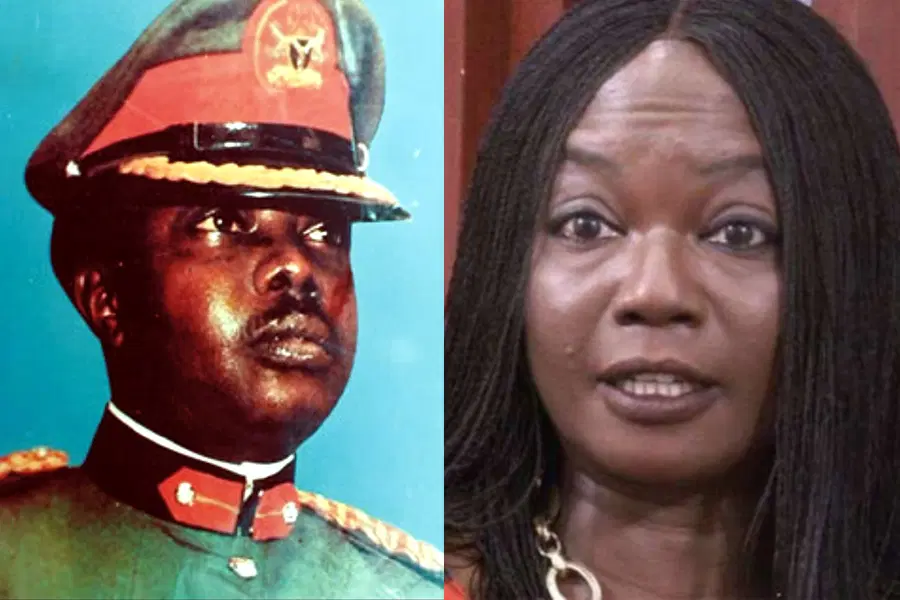
Aisha Muhammed, daughter of former Head of State, General Murtala Ramat Muhammed, has remarked on her father’s leadership style and simple lifestyle, saying that these principles led to both his long legacy and the circumstances of his killing.
Aisha, the CEO of the Murtala Muhammed Foundation, spoke on ARISE News’ Morning Show to commemorate the 50th anniversary of her father’s passing. She characterized her father as a leader who exemplified responsibility, accountability, and discipline. She claimed that he had a strong commitment to combating corruption, which he saw as a “cankerworm” that might ruin society, and that he demonstrated this commitment by his own actions.
She stated that General Muhammed purposely eschewed the trappings of authority, shunning motorcades, sirens, and extensive security forces in favor of living like an ordinary Nigerian. She pointed out that because of his simplicity, he was more susceptible to the deadly attack on February 13, 1976, when coup plotters stopped his car in traffic and killed him.
As you are aware, my father didn’t always have a lot of security, sirens, and motorcades. Now, there are people who say to me, 50 years later, it must have been pretty sad because of the loss, but that was what he embodied.
Because he didn’t have a lot of protection with him, it was fairly simple to kill him.
Like everyone else, he was stuck in traffic. As she considered the loss, she remarked, “In actuality, the traffic wardens stopped them, and they stopped, just like everybody else, and that’s when the coup plotters came out from behind the sectarian barricade, and then he was shot.”
General Murtala Muhammed came to power in July 1975 after toppling General Yakubu Gowon in a bloodless coup. Wide-ranging reforms were implemented during his brief 200-day term. He sacked almost 10,000 public officials suspected of corruption, formed seven new states, and launched arrangements for Nigeria’s transition to civilian administration. His administration also initiated the process that finally led to the move of the nation’s capital from Lagos to Abuja.