


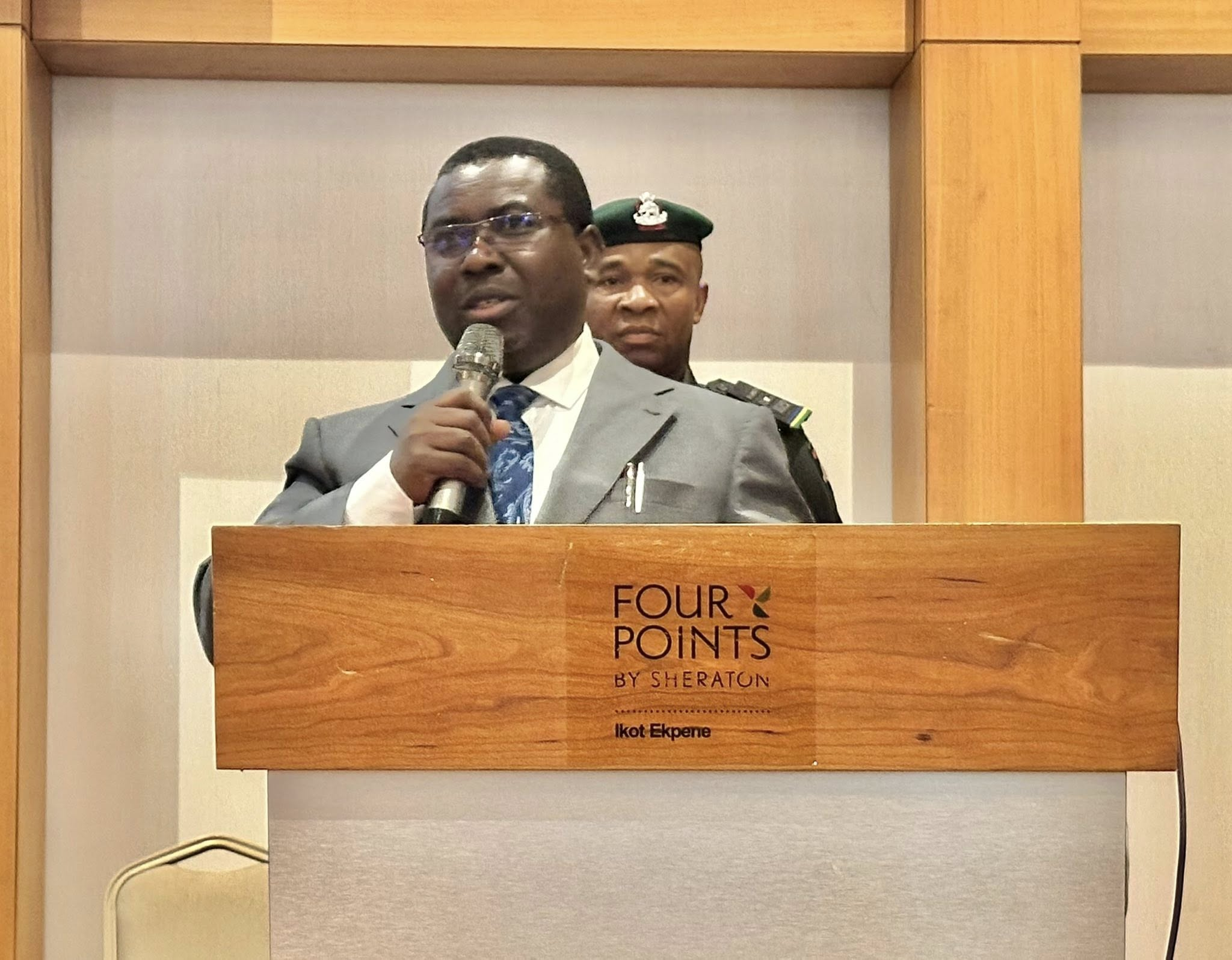
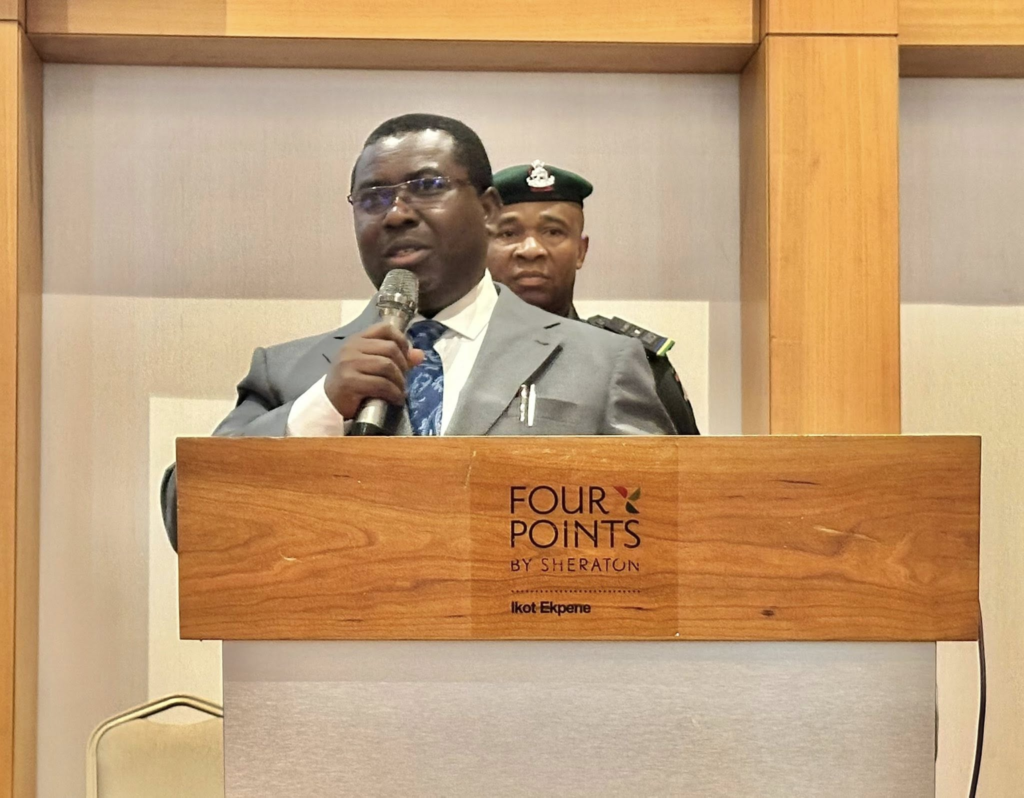
In order to evaluate its 2022 Regulations and Guidelines for Political Parties in accordance with the recently passed Electoral Act 2026, the Independent National Electoral Commission (INEC) has begun an important three-day Technical Workshop in Ikot Ekpene, Akwa Ibom State.
This was revealed in a statement posted on INEC’s official Facebook page on Wednesday.
The statement states that the workshop will take place on March 4–6, 2026.
According to Naija News, the review is the Commission’s first official attempt to align its regulatory framework with the new law’s requirements, which was signed in February 2026.
National Commissioners, the Akwa Ibom State Resident Electoral Commissioner, the Hon. Chairman INEC’s aides, the directors of important departments, and development partners are all present during the session.
INEC Chairman Prof. Joash Ojo Amupitan gave the opening and keynote speech, characterizing the workshop as a legislative and operational realignment required to fulfill the shortened timelines imposed by the Electoral Act of 2026.
The presidential and national assembly elections will henceforth take place on January 16, 2027, he declared, while the governorship and state assembly elections will take place on February 6, 2027, in accordance with the new law modifications.
He claims that in order to “sanitize party operations” and mainstream findings from the Political Party Performance Index (PPPI), a diagnostic tool intended to close the gap between party constitutions and grassroots realities, the Commission is going beyond the 2022 framework.
He cautioned that electoral integrity is seriously threatened by weak internal democracy, particularly by faulty party primaries.
He emphasized that the 2026 Guidelines will establish more stringent standards for membership documentation, financial transparency, and inclusion of women, youth, and Persons with Disabilities (PWDs). “If unpopular candidates are imposed through opaque processes, we risk voter apathy and an explosion of pre-election litigation,” he said.
In his introductory remarks, INEC Resident Electoral Commissioner for Akwa Ibom State Obo Effanga characterized the retreat as a chance for the Commission to enhance its comprehension of the new Electoral Act and revise its regulations to guarantee openness, equity, and administrative effectiveness.
Although Nigeria’s election system has gradually improved over time, he pointed out that ongoing reform is still necessary to maintain voter confidence and bolster democratic institutions.
The 2022 Regulations and Guidelines for Political Parties revision could not have come at a more crucial moment, according to Dr. Baba Bila, National Commissioner and Chairman of the Election and Party Monitoring Committee. He clarified that this is the Commission’s first workshop to look at how the Electoral Act of 2026 will affect its rules and policies for different electoral activities.
He pointed out that the Regulations and Guidelines for Political Parties 2022, which regulate the registration, statutory compliance, administration, conduct, and monitoring of political parties and related political activities, are the first document scheduled for review.
The 2022 Regulations are divided into five sections that address the following topics: political party registration and deregistration; party membership and structure; party conventions, congresses, and meetings; rally and campaign conduct; and party primary and candidate nomination process monitoring.
He formally established the framework for discussions about the 2022 Regulations’ review and alignment with the 2026 Electoral Act.
Mrs. Joan Arabs, Director of Election and Party Monitoring, clarified that the goal of the session is to
* Examine the 2022 Guidelines’ operational difficulties. * Rearrange clauses to improve administrative efficiency* Incorporate the Electoral Act of 2026’s additional legislative provisions
* Align rules with the six constitutional functions of INEC.
These duties include registering and deregistering political parties, keeping an eye on primaries and party funds, inspecting party accounts, controlling campaigns, and creating enforcement systems.
She emphasized that the updated document must be thorough, complying with the law, and easy to use.
The Political Party Performance Index (PPPI), which was created in cooperation with INEC and the Westminster Foundation for Democracy (WFD), is a significant feature of the reform process.
The 2022 Regulations worked successfully for Nigeria during the 2023 general elections, according to Adebowale Olorunmola, Country Director of WFD Nigeria. However, she noted that “current realities” necessitate new operating instruments.
He underlined that political parties need to develop into functional democratic organizations with internal democracy, inclusivity, accountability, and adherence to the law.
Olorunmola praised Prof. Amupitan’s leadership and reiterated WFD’s dedication to backing changes that bring party operations into line with Nigerian voters’ expectations.
Amupitan, the chairman of INEC, also expressed concern about the increasing number of leadership conflicts inside political parties, which frequently result in drawn-out legal issues.
He pointed out that by restricting judicial intervention in internal party affairs, Sections 83(5) and (6) of the Electoral Act 2026 now uphold the principle set forth in Onuoha v. Okafor (1983).
He claims that by lowering intra-party strife and bolstering internal dispute resolution procedures, the Commission will be able to concentrate on its primary responsibility of managing elections rather than defending pointless lawsuits.
“Our assignment,” Prof. “Is to ensure that political parties evolve from mere election vehicles into enduring democratic institutions,” Amupitan added.
The updated Regulations and Guidelines for Political Parties are anticipated to be crucial in creating a more open, inclusive, and predictable electoral process in Nigeria, as the 2027 elections already have a shortened schedule.