



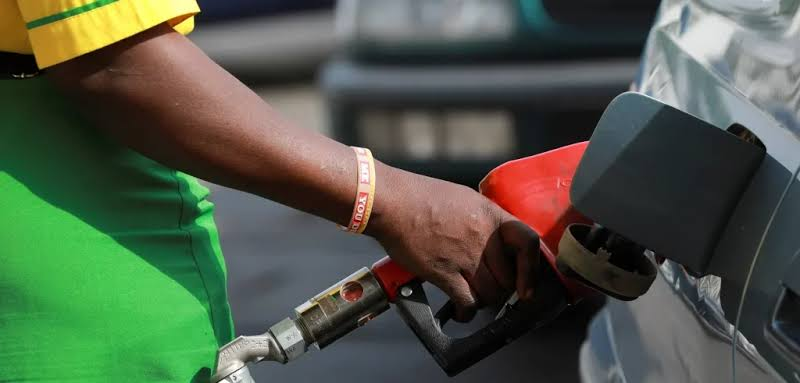
In many regions of Nigeria, the price of Premium Motor Spirit, also known as petrol, is getting close to ₦1,400 per litre due to the ongoing disruption of global oil markets caused by the US-Iranian conflict.
According to Naija News, the move came after the US and Iran were unable to reach a ceasefire that would allow the Strait of Hormuz to reopen.
Petrol prices have continued to rise due to the ongoing Middle East turmoil and the United Arab Emirates’ reported departure from the Organization of the Petroleum Exporting Countries on Tuesday.
The price of a barrel of Brent crude increased from $105 on Monday to $118 on Wednesday.
The Dangote Petroleum Refinery increased the price of its gasoline product from N1,200 to N1,275 per litre in response to the rise in crude prices.
Price data obtained from Petroleumprice.The refinery raised its fuel loading price from ₦1,200 to ₦1,275 per litre, while coastline supply rates jumped to ₦1,215 per litre, according to a Dangote refinery official’s confirmed on Wednesday.
Around 4 p.m. on Tuesday, the refinery stopped entering pro forma invoices, which disrupted regular supply scheduling throughout its loading system, according to a source familiar with the situation who talked with Punch.
The source claims that sales of gasoline and diesel to marketers immediately ceased as a result of the halt.
Crude Prices Are Raised by NNPC
According to a report by Oilprice.com, the Nigerian National Petroleum Company Limited (NNPCL) increased the official selling prices of all 37 Nigerian crude grades for May-loading cargoes.
According to the report, NNPC raised the price of its flagship grade, Bonny Light, by $6.13 per barrel for May compared to April, indicating that Nigeria was benefiting from the US-Iran war.
According to the analysis, Nigeria gains from the war in Iran. For May-loading cargoes, Nigeria’s national oil firm, NNPC, has increased the official selling prices of all 37 Nigerian crude grades. Its flagship grade, Bonny Light, has increased by a staggering $6.13 per barrel from April, while Forcados has increased by $7.01 per barrel.
There were worries that the Dangote refinery would be able to pay more for oil as a result of the move, driving up fuel costs.
Filling Stations Modify Pump Costs
According to checks, filling stations in Lagos and other South-West states swiftly increased pump rates on Wednesday from an average of ₦1,250 to more than ₦1,300 per litre.
Petrol costs between ₦1,315 and ₦1,350 per litre in Lagos and Ogun states.
Petrol was offered at NNPC filling stations along the Lagos-Ibadan Expressway’s Mowe/Ibafo axis for ₦1,315 per litre, while Mobil charged ₦1,320.
The Dangote refinery hiked the price of gasoline to roughly ₦1,400 per litre, and prices were higher in the North and other places distant from it.
The Dangote refinery hiked the price of gasoline to roughly ₦1,400 per litre, and prices were higher in the North and other places distant from it.
Because the Federal Government had prohibited the supply of petroleum products in their territories, residents of Ogun border communities said that gasoline was sold for about ₦1,700 per litre.
Billy Gillis-Harry, National President of the Petroleum Products Retail Outlet Owners Association of Nigeria (PETROAN), stated that unless the Middle East issue is defused, gas prices would keep going up.
He claimed that sudden pricing volatility has made it challenging for marketers to make commercial judgments.
Gillis-Harry stated, “Price volatility is what we have been introduced to.” It’s concerning that the government isn’t saying anything about it. The government could at least devise some policies.
“The price of crude oil is currently rising. Along with a few other things, the government can help lower transportation costs, which will make food less expensive. That is what we have recommended.
He cautioned that if the crisis continues, the price of gasoline could surpass N1,500 per liter.
If you go back to our projections, I mentioned it there because, in my opinion, Mr. Trump is not very clear about what he wants—whether it is to destroy the Iranian nuclear site or to seize the crude oil like they are seizing Venezuela’s. We don’t really know what he wants, in my opinion. Therefore, we are unsure if the crisis is coming to an end,” he stated.
Retailers Look for Local Pricing
Nigeria has to increase production and refine more petroleum domestically, according to Gillis-Harry.
“So we should pay attention to all those areas and increase our production value and production speed so we can at least clearly put 2 million barrels into domestic refining,” he continued.
That will be much better since we will then develop into a refining center to ensure employment, boost enterprises, and stimulate our economy.
“Dangote has increased the price again because he is the lord of the manor,” he added, adding that the Dangote refinery had demonstrated its power in the downstream industry by altering prices. Thus, we will continue to make adjustments.
According to the president of PETROAN, the increase in NNPC crude prices was also a factor in the rise in gas prices.
“Every single increase from any quarter is because we are not trading locally,” he stated. Nigerian goods are still benchmarked internationally.
Crude is still valued in dollars, regardless of whether we are paying naira for local refining. You won’t have to rush for foreign exchange to purchase the crude you plan to refine here, which is the only thing it has done.
He pleaded with the government to grant other refineries that are either producing or planning to generate gasoline the same naira-for-crude privilege.
The Federal Government was also encouraged by local refiners to cease utilizing foreign pricing benchmarks for petroleum supplied to domestic refineries.
They contended that local refining is weakened and expenses are inflated under the current arrangement.
Crude delivered to local refineries should be charged according to a locally created agreement rather to Brent, according to Eche Idoko, spokeswoman for the Crude Oil Refiners Association of Nigeria.
“If you are using Brent to benchmark our pricing, the factors that affect Brent pricing will still affect the price at which you are landing crude here,” Idoko stated.
“We have consistently maintained that the components of Brent that are not relevant to the commerce between the local refinery and the oil producers ought to be excluded. In this way, you obtain the real price of oil for nearby refineries.
According to economist Bismarck Rewane, the government may sell crude to the Dangote refinery at a set price.
“One of the options that can be explored is that the Federal Government of Nigeria agrees to sell crude to the Dangote refinery at a specific price with the assurance that the price of refined products does not increase,” he stated.