




By Ilorin Demola Akinyemi
Brigadier General G. Alabi Isama (rtd), a retired general in the Nigerian Army, has warned that corruption and moral compromise are bigger challenges to the country than a shortage of resources, urging young Nigerians to reach above their potential and embrace integrity-driven leadership.
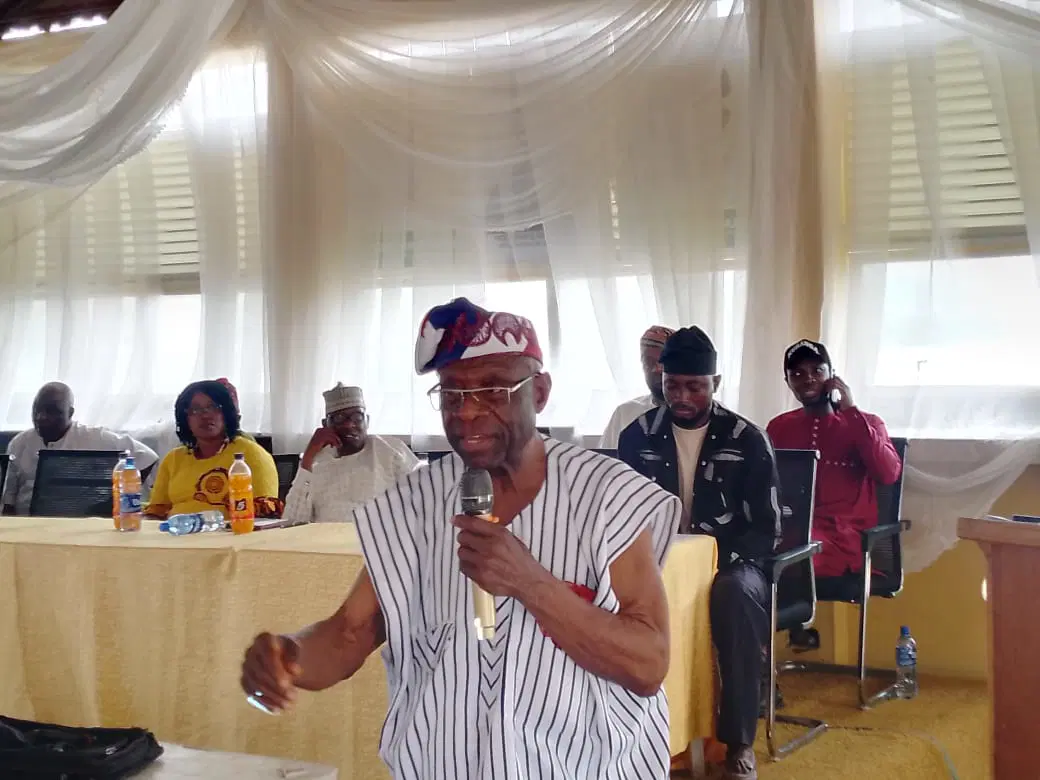
At the Leadership Summit hosted by the University of Ilorin’s Postgraduate Students’ Association on Wednesday, Isama took the lead while giving a talk titled “From Potential to Power: Nurturing Youths for Transformative Leadership.”
Nigeria’s youthful population is still its greatest asset, according to Isama, but he emphasized that talent without morals will only make the nation’s issues worse.
“Every young person has potential from birth, but not all potential turns into power. According to him, “power is the ability to influence positive change, and that journey requires vision, discipline, and integrity.”
He claims that although many Nigerian adolescents have been derailed by inadequate supervision and negative role models, they have continued to flourish in academics, technology, entrepreneurship, sports, and the creative industry.
“Youths’ energy can be misused for fraud, violence, drug abuse, and political thuggery when they are not properly guided.” Isama cautioned that “potential without direction becomes wasted talent.”
The retired Army general attributed Nigeria’s leadership crisis mostly to corruption, pointing out that years of misuse of public funds and lax accountability frameworks had led to insecurity, unemployment, inadequate infrastructure, and a decline in public confidence.
“A corrupt system only harmed Nigeria; it did not create it. No great nation has ever been created by corruption. It merely slows down development and increases people’s pain,” he stated.
Isama specifically warned young people against viewing dishonest politicians as successful role models, characterizing this kind of thinking as harmful to the nation’s future.
“Nigeria’s future will be worse than its current state if the next generation adopts the same corrupt behaviors. Integrity over wealth, service over selfishness, and justice over power are all necessary for transformative leadership, he continued.
The Octogenarian urged young Nigerians to be courageous enough to confront injustice and reject wrongdoing even when it is popular, emphasizing that leadership is about having a positive influence rather than holding positions.
He stated, “Youths are leaders now, waiting for opportunities to showcase their potential; they are not leaders of tomorrow.”
He stated that colleges continue to be vital breeding grounds for Nigeria’s future leaders and listed integrity, education, critical thinking, courage, discipline, and service to humanity as essential attributes required to develop young people into transformative leaders.
“The values you develop on campus today—honesty, self-control, and diligence—will shape the country in the future. It will be more difficult for corruption to persist at the national level if it is rejected on campuses, he pointed out.
In addition to moral principles, Isama suggested structural changes in a number of important areas. In politics, he promoted true federalism, independent candidacy, and more robust checks and balances while calling for the elimination of godfatherism, feudalism, and severance benefits for those in political service.
“Unity, accountability, and a distinct division of authorities are essential. He asserted that “personal interests and godfather control should not be reduced to democracy.”
Regarding education, he called for changes to admissions procedures and supported free education up to the university level as well as the elimination of what he called nepotistic practices.
In order to increase grassroots security and lessen centralized authority, the former military officer suggested establishing state, local, and school police.
Along with advocating for resource control, stable land tenure, and the distribution of oil blocks to states rather than individuals, he also called for economic and oil sector changes.
An oil system primarily intended for export and foreign interests must be outgrown by Nigeria. Isama stated that every state ought to have the authority to run its own economy.
In closing, he urged young people to view leadership as a deliberate decision rather than a privilege of status or age.
“The future of Nigeria will alter by choice, not by accident. Don’t take on a corrupt system’s shortcomings. He stated, “Challenge it with integrity, vision, and service.”
“You are not too small to have an impact or too young to be leaders as students. Your potential may reshape Nigeria and leave a legacy of hope for future generations when it is guided by ideals.