



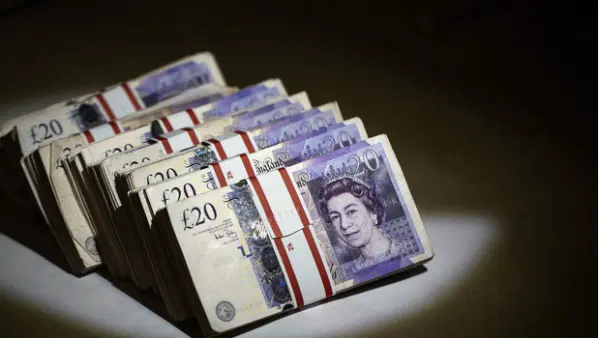
On Thursday, January 29, 2026, the early morning trading session saw substantial fluctuation between the British Pound Sterling and the Nigerian Naira. The Pound has moved within a small range, reflecting changing liquidity in the official market, while the Naira continues its wider recovery against major world currencies.
Official Trends in the Market
The British pound began the day at 1,927.89 per Naira on the Nigerian Foreign Exchange Market (NFEM). The currency had a few small fluctuations throughout the early hours, falling to a low of 1,924.94 before rising again. The rate had stabilized at roughly 1,933.41 per Naira by the mid-morning session.
From the initial numbers, this indicates a slight increase of roughly 0.28 percent. The Central Bank of Nigeria’s (CBN) effective administration of the Electronic Foreign Exchange Matching System (EFEMS), which has made price discovery easier, is credited by financial analysts with this consistent success. The Pound-Naira pair is still susceptible to changes in global markets and UK economic data that was revealed earlier today, notwithstanding the Naira’s notable increase against the US dollar this week.
Market Performance in Parallel
Although it is still much more stable than the peaks saw in late 2025, the parallel market is still trading at a premium. Bureau De Change operators are currently quoting the British Pound between 2,015 and 2,030 in key economic hubs like Lagos and Abuja.
Over the course of the week, the difference between the official and informal sectors has remained largely stable. Lagos traders observe that paying school fees and personal travel allowances continue to be the key drivers of demand for the pound. Even though the official rate experiences slight intraday variations, the absence of active speculative activity has helped keep the informal rate within a predictable corridor.
An overview of trading rates
Official NFEM Opening: 1,927.89 Official NFEM Current: 1,933.41
Range of the Parallel Market: 2,015–2,030
Market observers are searching for indications of additional Naira consolidation as the week draws closer to January’s last trading day. Nigeria’s external reserves are still growing, thus the local currency’s prospects are still favorable when compared to the pound and other significant competitors.